Rollo de Queso

Rolllo de Queso

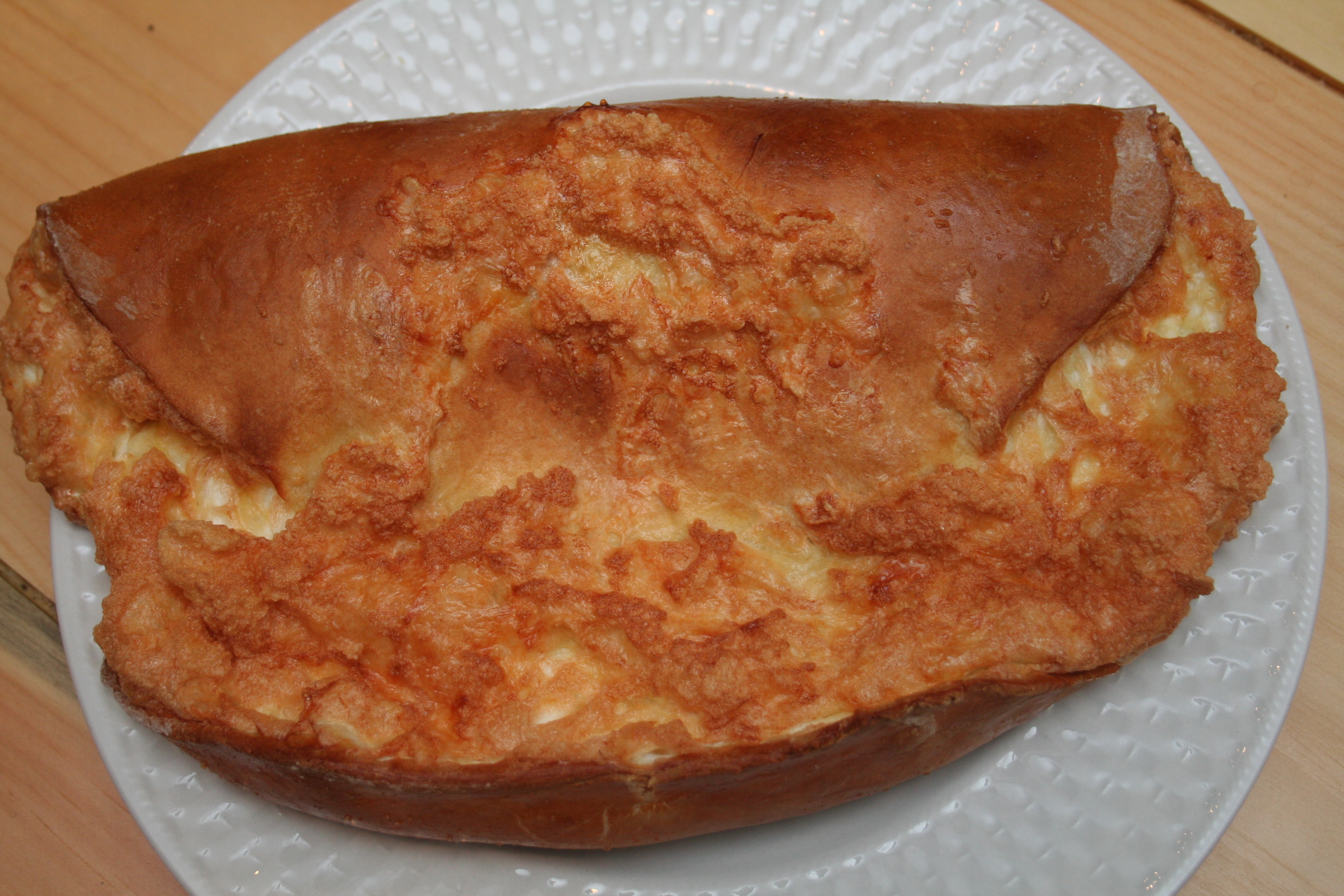
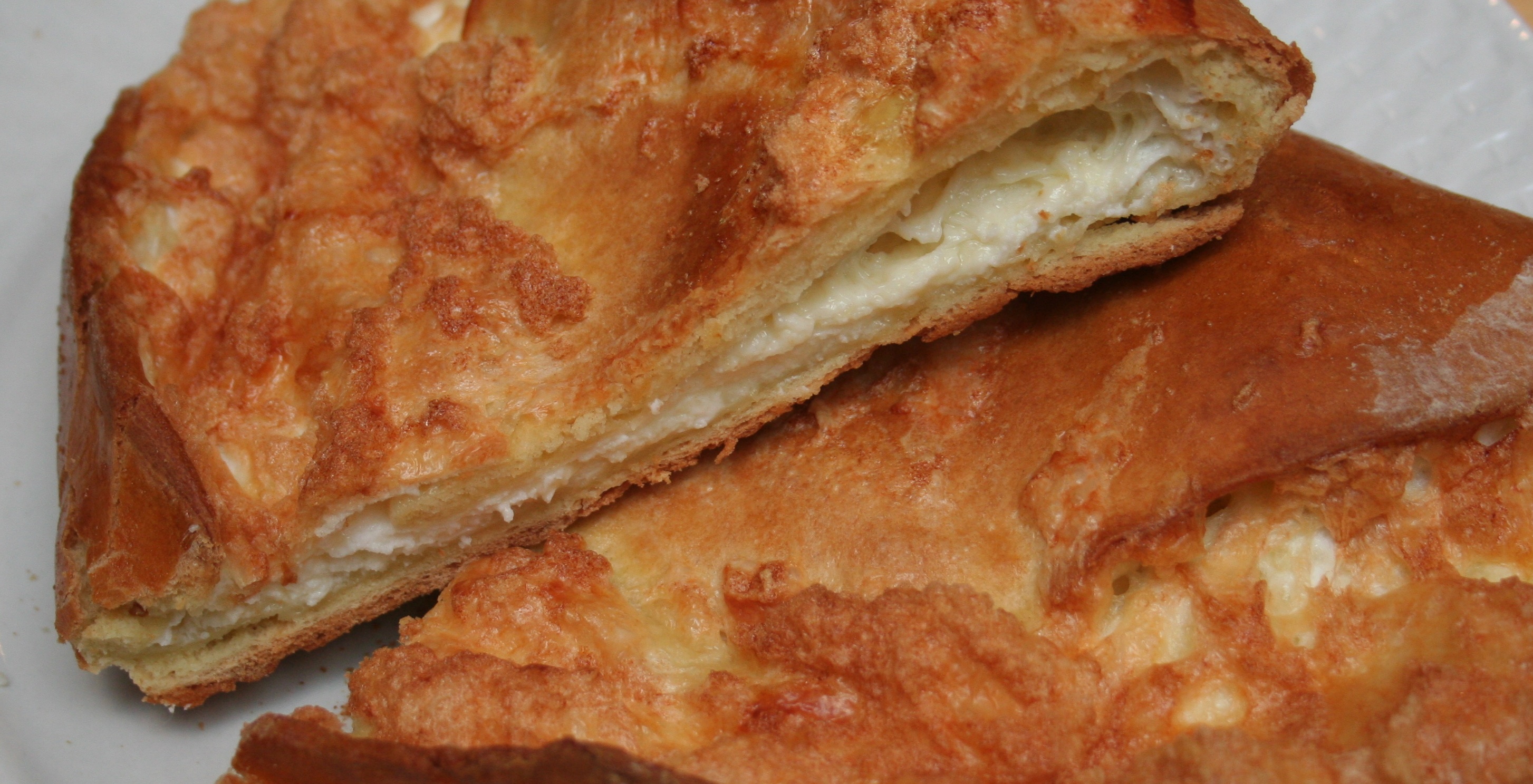
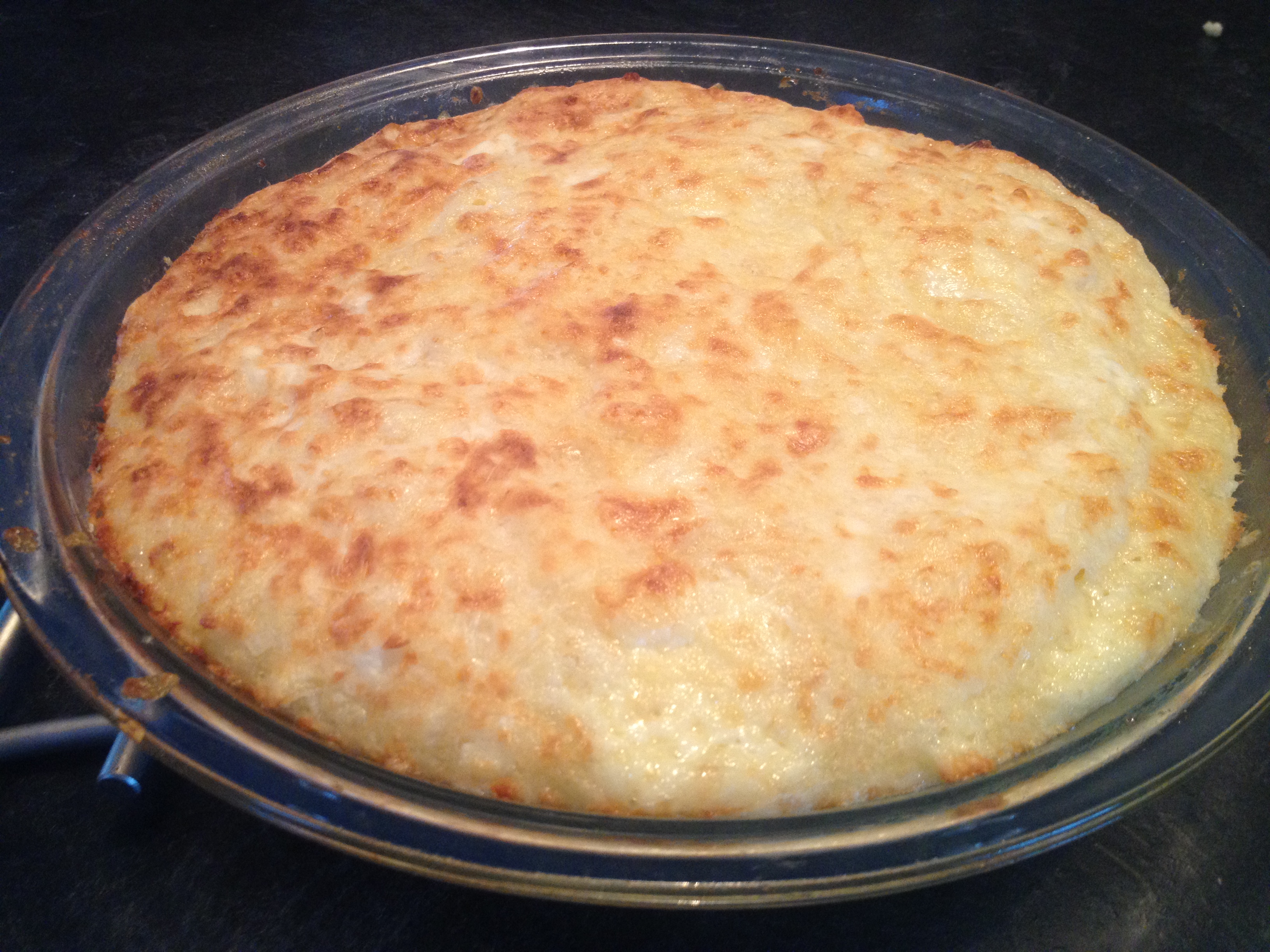
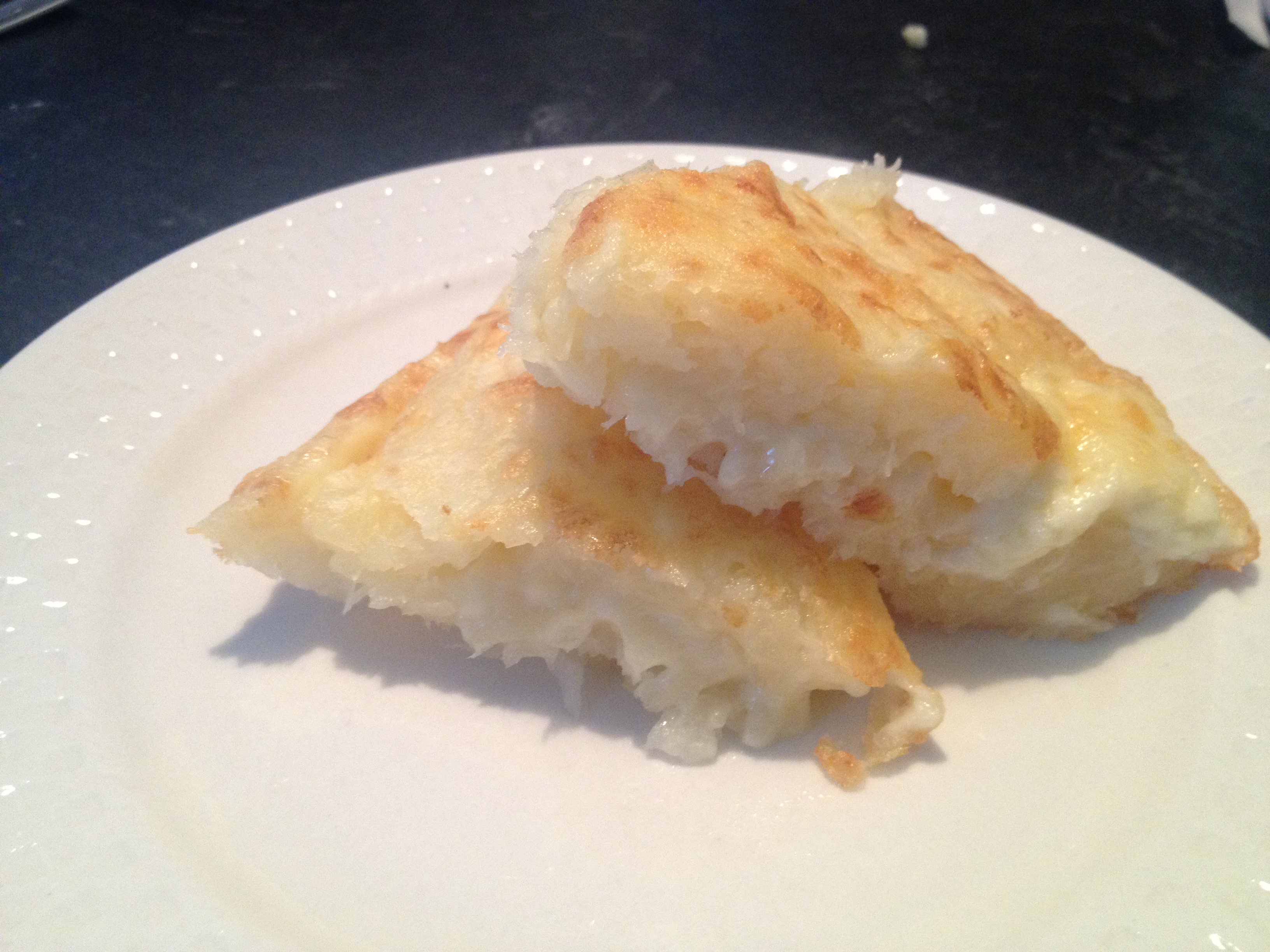
rollo queso 1 I grew up with a lot of cousins around me. My mom had 8 siblings. Feeding all these kids was hard work, so my mom and aunts used get together during the weekends to bake bread for the week for the big family. Some weekends they would do this magnificent rollo de queso. They used to make them the size of our hands to have them as a snack straight from the oven. They would also make them big enough to feed the adults, cutting the rollo de queso in nice slices. I love this bread for the amount of cheese inside and for the soft and crumbly pastry exterior. As kids we all sat next to each other to enjoy our rollo de queso. We usually ate them for breakfast or tea time. Here in Maine in the winter I eat them all the time!

Rollo de Queso

Serves 2 large rollo de queso

Ingredients

2 cups flour

2 Tsp baking powder

2 Tbsp crisco

1/4 tsp salt

1 tsp sugar

1/2 cup warm milk

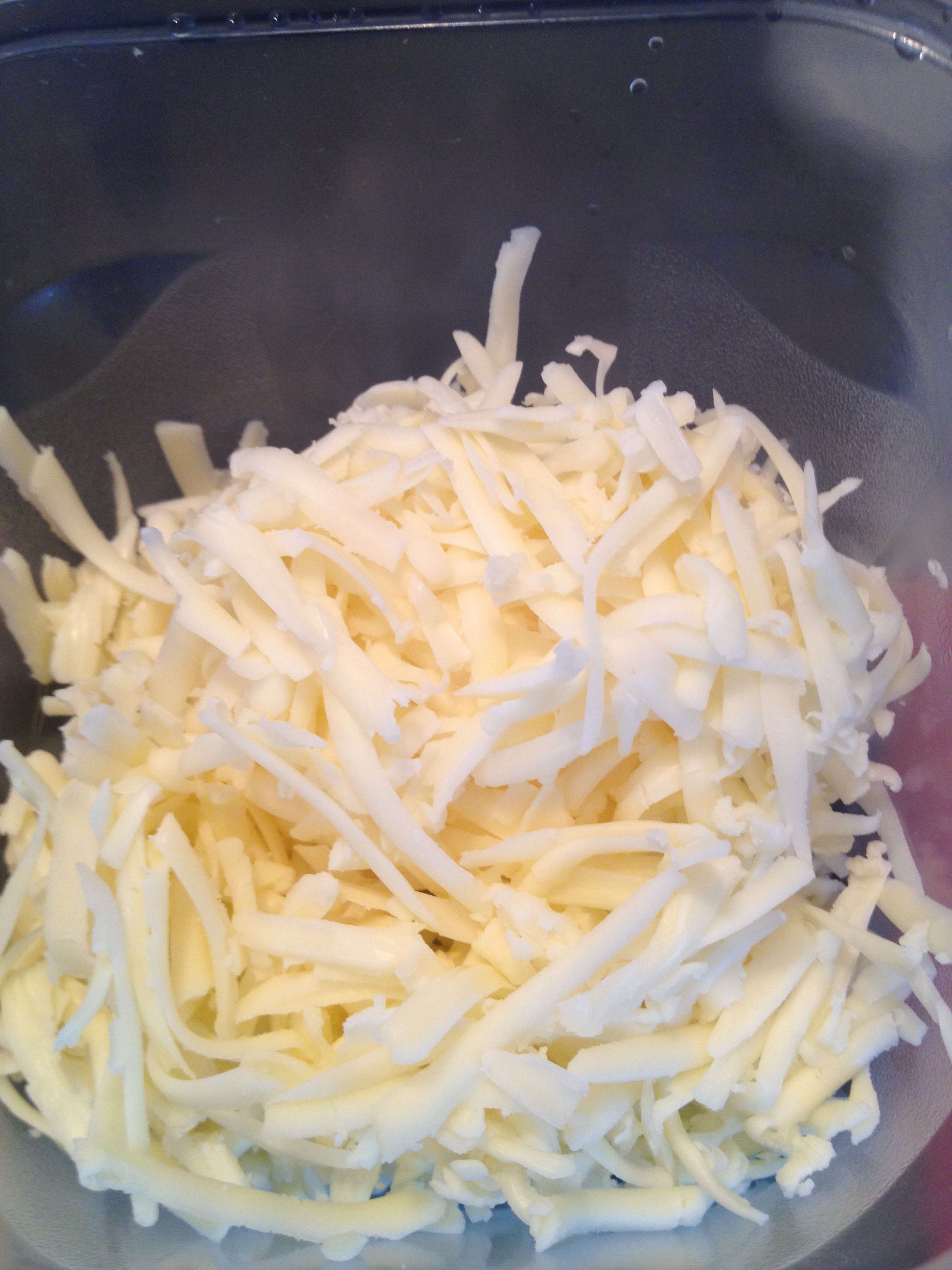
2 cups of grated Monterrey Jack cheese, (in Bolivia we use Menonita, San Javier or Queso Fresco)

2 egg whites

3 egg yolks

Cooking Instructions

Preheat the oven to 350F

Mix the flour with the baking powder and set aside

In a large bowl mix together sugar, salt, 2 egg yolks and crisco, until it is well mixed. Add the warm milk slowly, combining with the flour until you have a nice soft dough. Divide the dough in two and let the cool for 20 min.

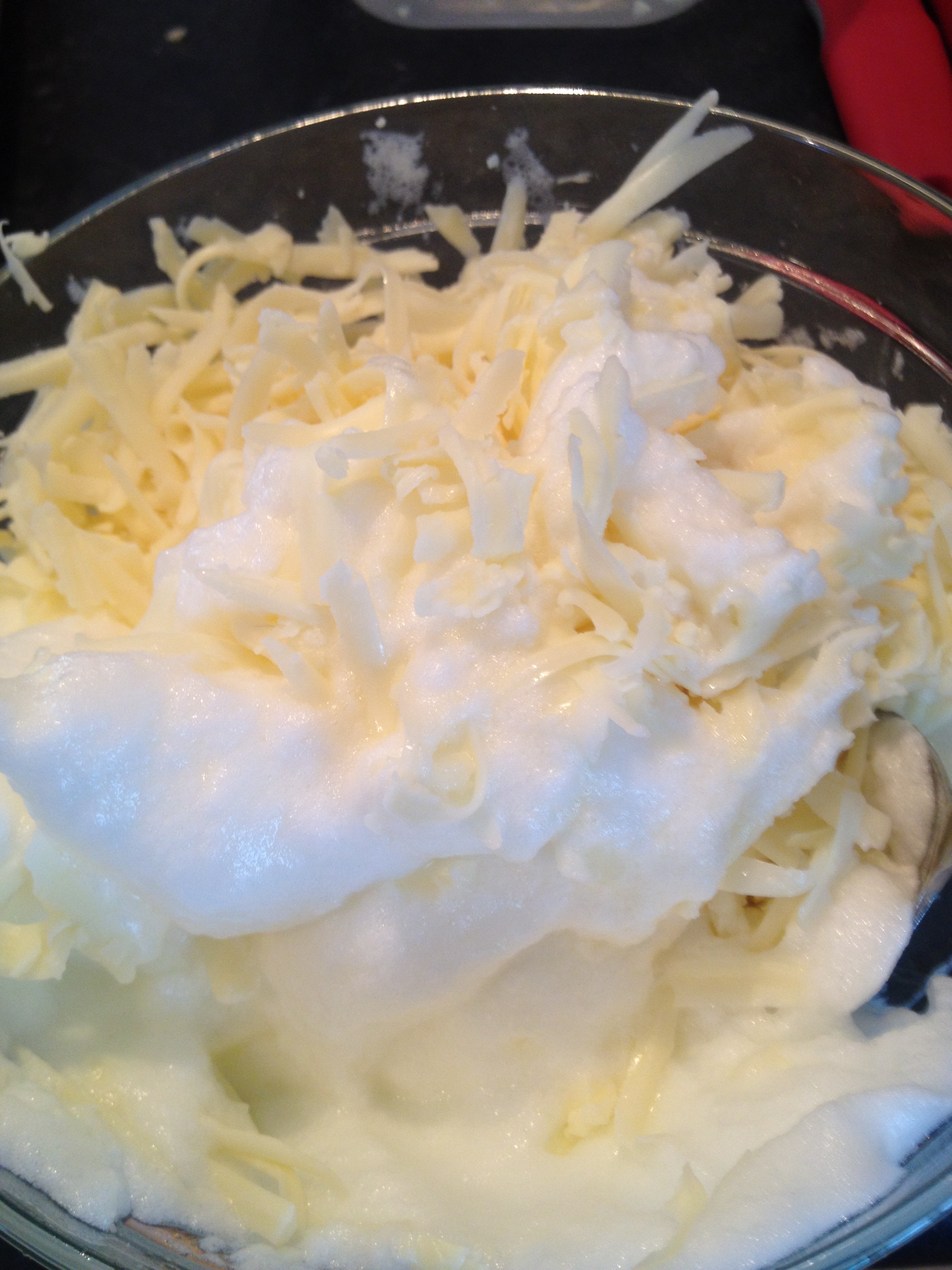
Meanwhile beat egg whites until hard (punto nieve). Add the cheese, mix, and set aside.

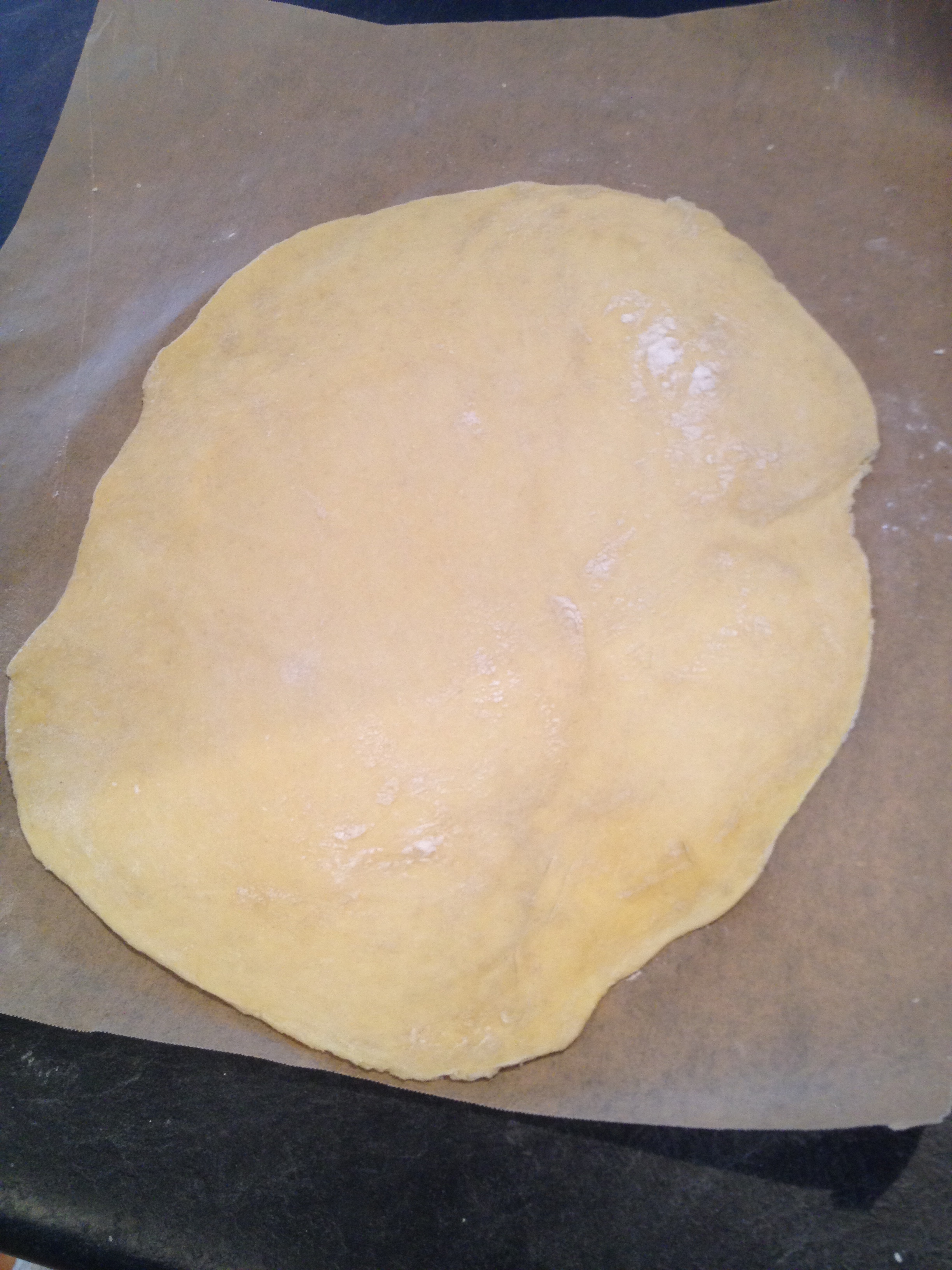
Roll the dough on top of parchment paper, until it’s thin

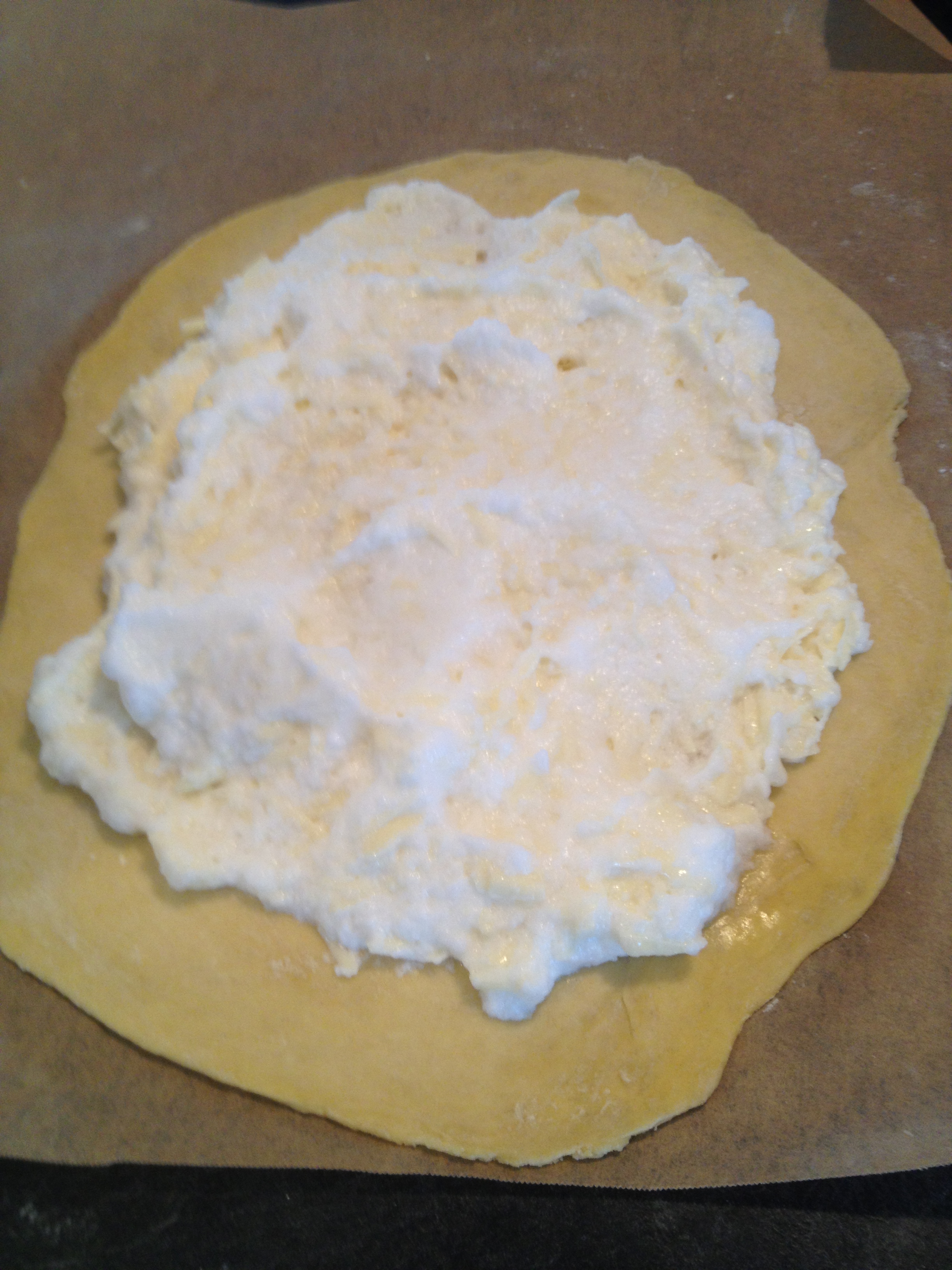
Add half of the egg whites and cheese in the center of the dough.

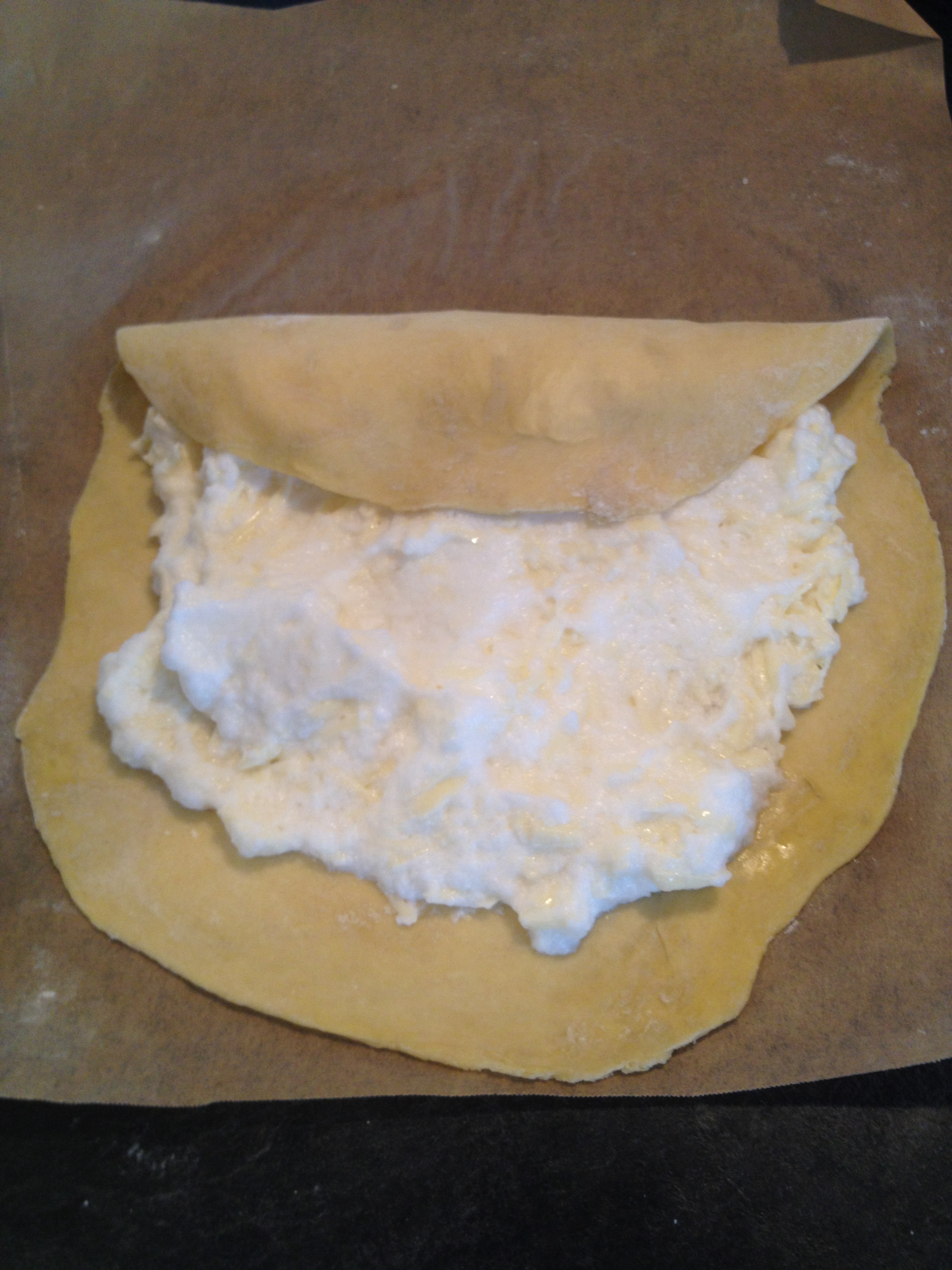
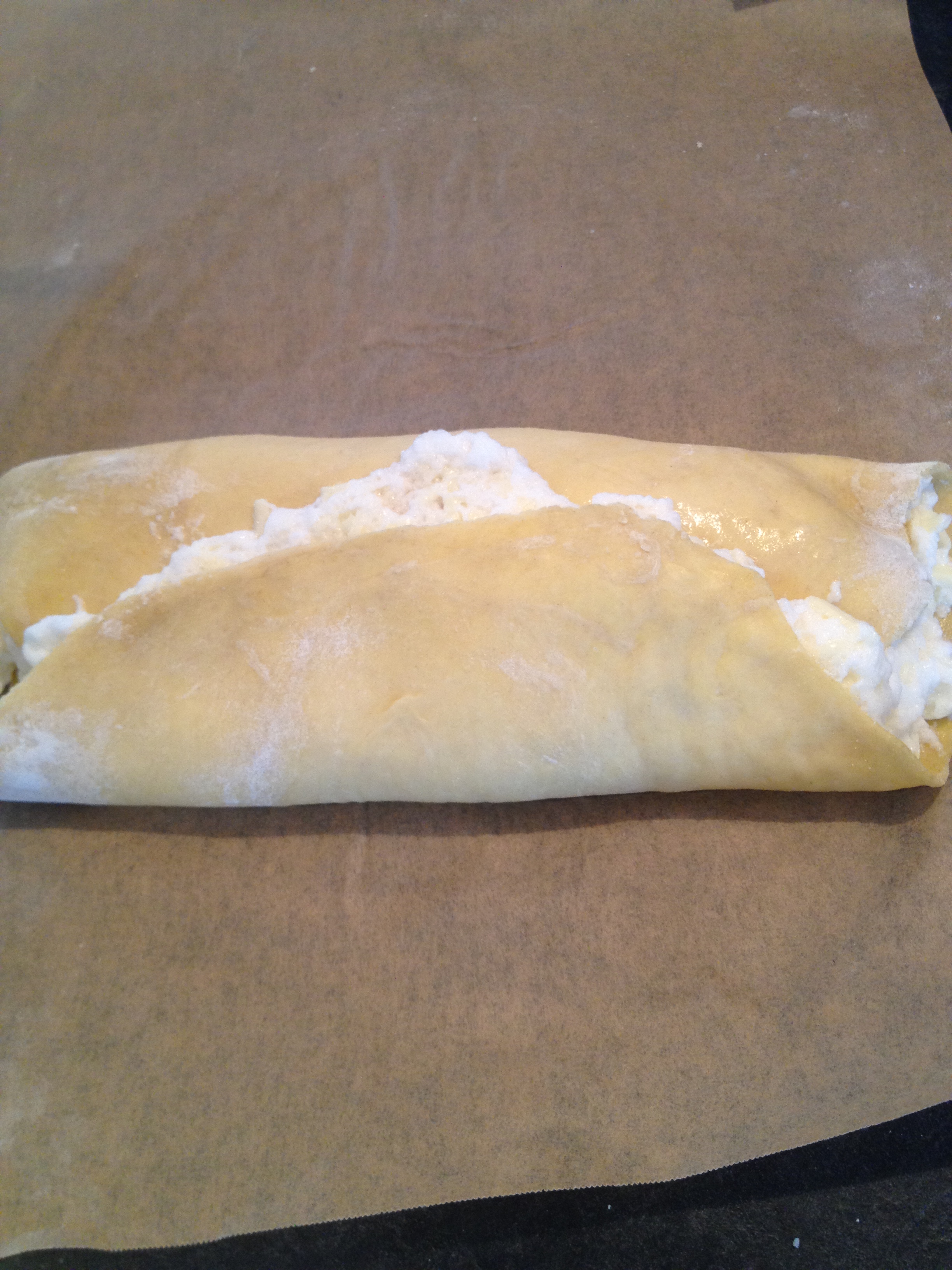
Fold one of the ends to the middle and the fold the other end on top.

Repeat the same with the other half of the dough and egg cheese mix.

Brush both of them with the remaining egg yolk and bake it at 350 for 45 min.

I love them when they just come out of the oven! You can freeze them and re-heat them before eating. Enjoy!

IMG_5357 parablog2

Charquekan

Charquekan

My family used to travel a lot in Bolivia when I was little and the first time that I tried charquekan was when I was 8 and we went on a school excursion to the Lake Titicaca. All the kids were from the countryside and they all had their food in aguayos (a traditional blanket) and I remember when we all sat together to eat lunch the teacher asked us to sit in a circle and share our food. When I saw my friends’ lunch that still was warm with some steam coming out of the aguayo, I couldn’t resist the smell of the purple potatoes with cheese and dried llama meet on top. That was my first Charquekan made of llama- the best that I’ve tried so far. That charque did not compare at all with the cold chicken on my plate that my mom put together for my lunch. Enjoy this wonderful traditional dish!


Serves 6

Ingredients:

12 large purple potatoes.

6 hard boiled eggs

6 slices of fresh cheese you can replace with thin slices of monterrey jack (1 slice per person)

1 cup dry corn

8 oz of charque (Dry beef)

1/4 cup oil to fry

1/2 cup of Llajua (see Llajua recipe)

Boil the dry charque for about 1/2 hour. This will allow it to lose some of its salt. Rinse in cold water and, using a meat softener/tenderizer, punch really hard until meat is soft enough that white strips appear.

Boil the potatoes with their skins on. If you do not have the purple potatoes you can use red potatoes. I love the purple ones for their flavor and color. This type of potato’s skin turns a dark purple  after cooking.

While the potatoes are being cooked, we can cook the dry corn. This corn is big and has the skin on it. You need to soak them the night before and cook them for about an hour.

Cook the meat in a pan with vegetable oil. The oil needs to be hot, the meat cooks really fast, so you only need a few seconds per side.

Take them out of the pan and put them on a paper towel.

Place the plate with the potato and corn on the bottom and the meat on top with a piece of cheese on the side. This  goes really well with Llajua.

My sister helped with the pictures today. She is happy to help me but not to be in the pictures!

Arroz Con Leche

Arroz Con Leche

Happy Easter! Felices Pascuas!

My favorite part of this holiday has always been the dessert. I grew up in a large family surrounded by  a lot of my cousins. On this holiday, all our moms would get together to cook 12 dishes including Arroz con Leche and Biscocho (sweet bread) and cook all morning to part of the afternoon. My cousin and I used eat the other dishes so fast just to get to dessert. They would give us a pieces of a good Biscocho and a cup of Arroz con Leche. We sat together in a circle looking at each other with big smiles to finally have the most delicious dish of the day. I hope you enjoy this as much as I do. Disfrutenlo!

Serves 8

Ingredients:

1 ½ cup of rice

5 cups of water

½ cup of sugar

4 cups of milk

4 0z evaporated milk

½ tsp cloves

¼ stick cinnamon

Powdered cinammon

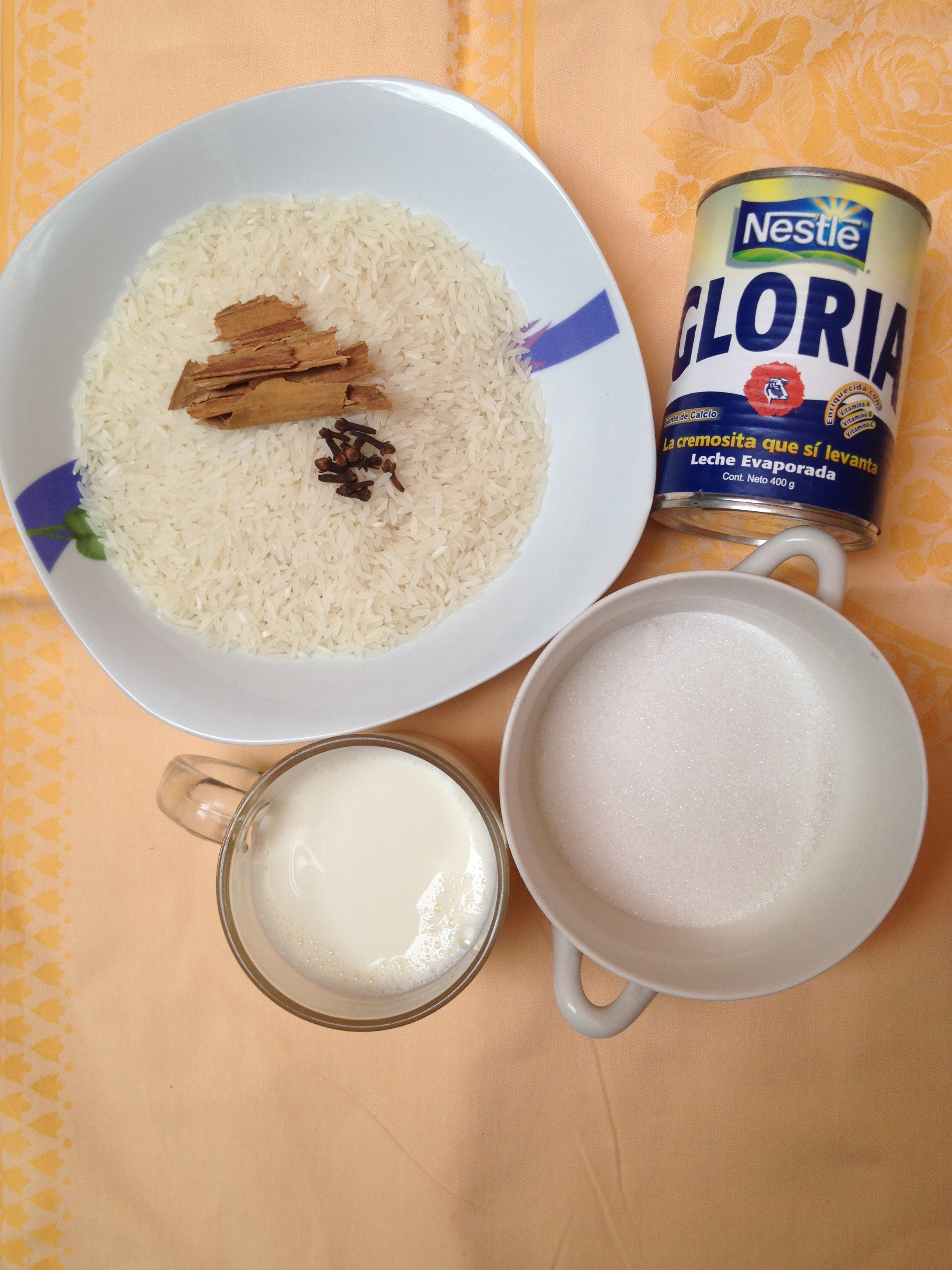
Get the ingredients ready.

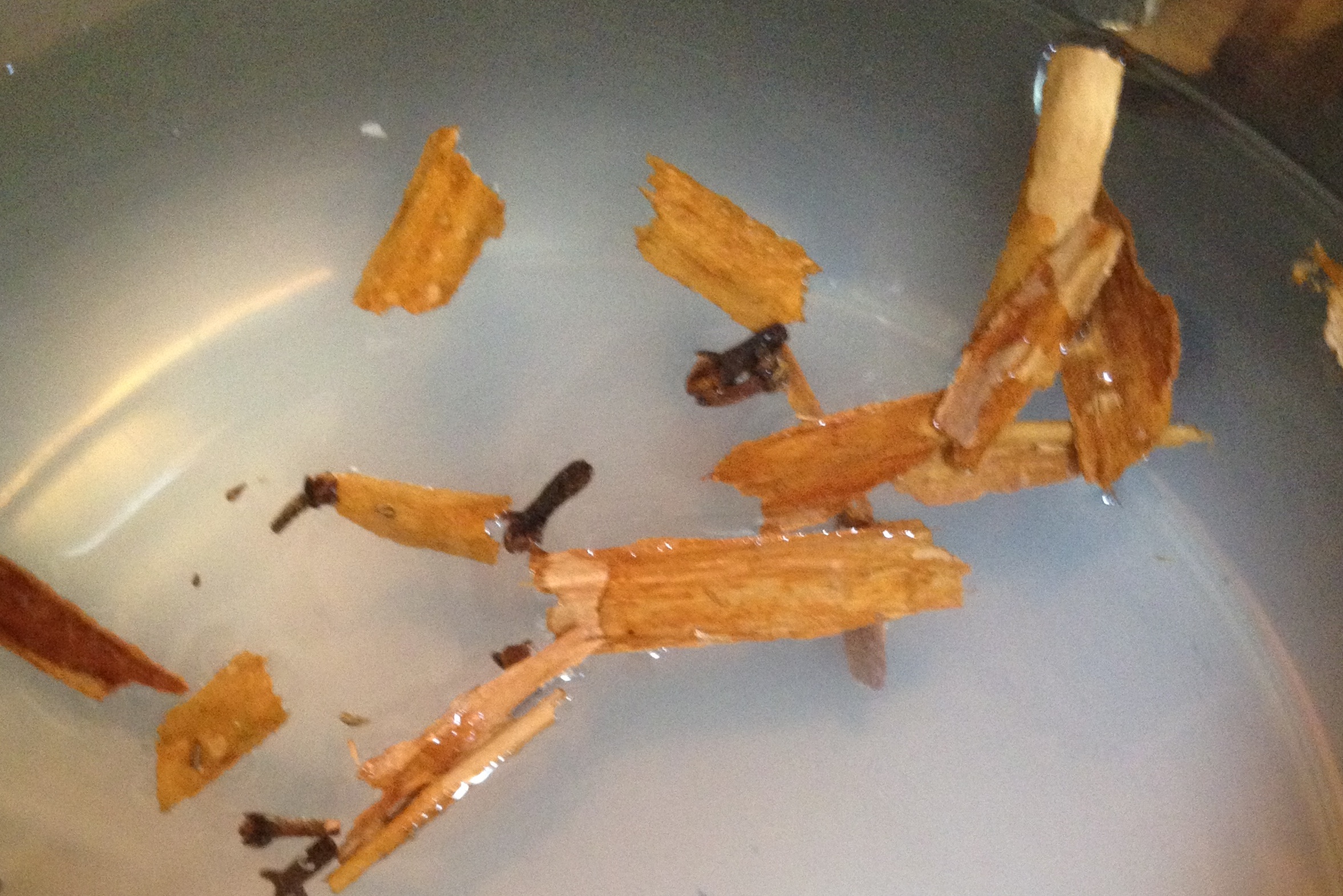
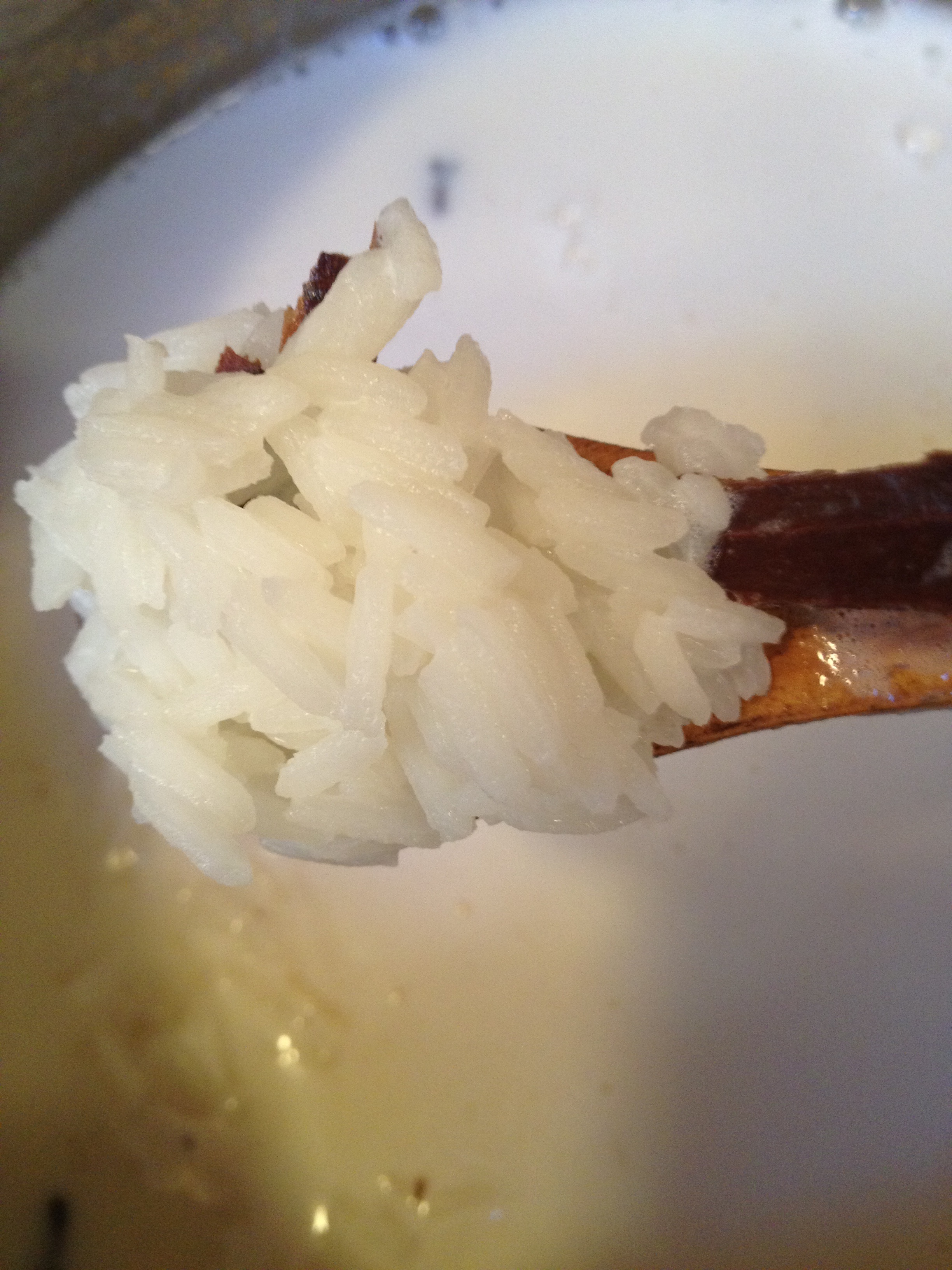
Put the water in a large pot and add the cloves and cinnamon. Let it boil for 5 min and add the rice. Stir to make sure that it doesn’t stick in the bottom. It needs to be cooked in water first for about 10 min.

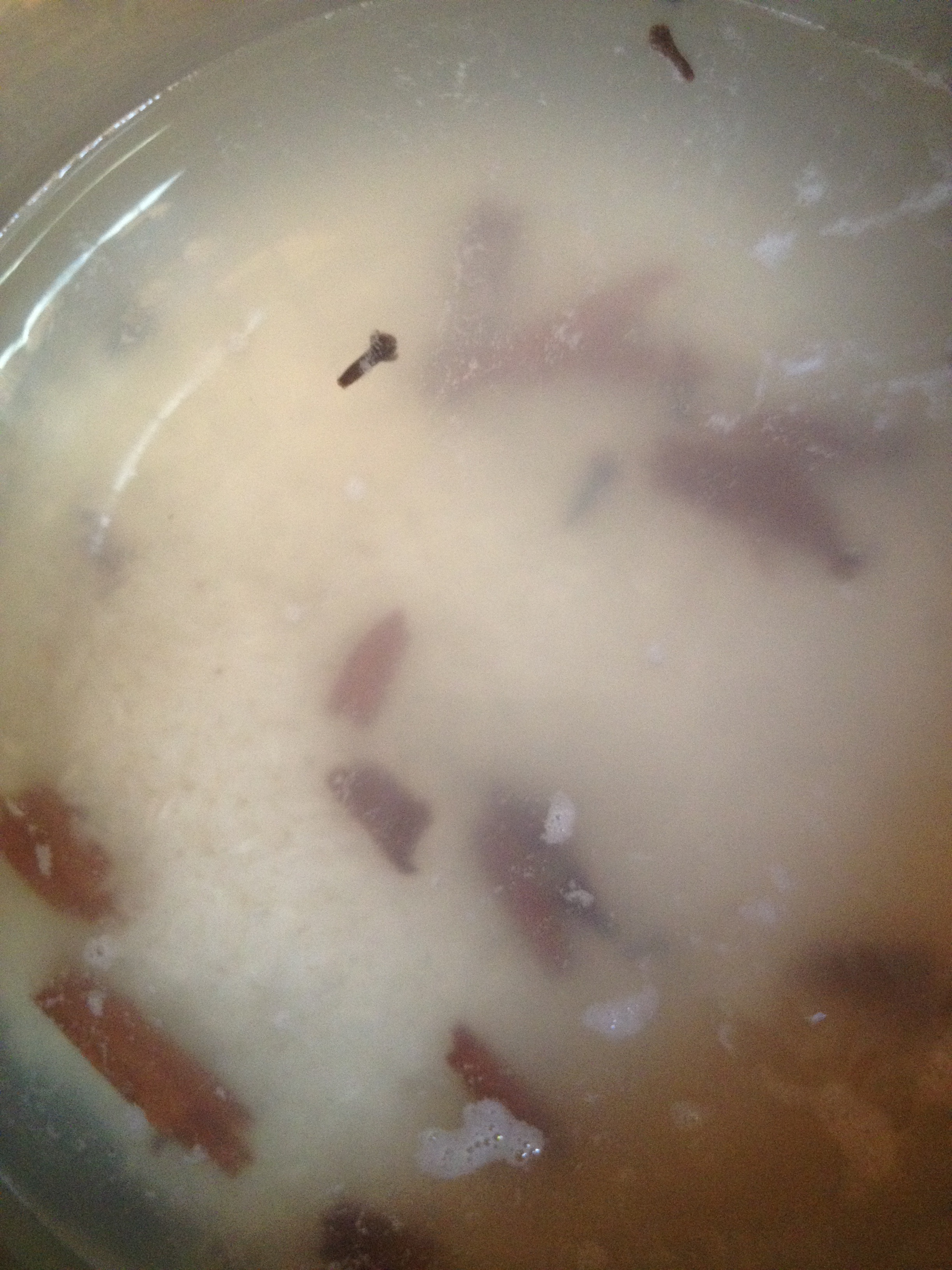
You will see that the rice has absorbed most of the water. Add the milk and sugar and let it cook for another 15 min.

Add the evaporated milk and let it boil for 5 min and it’s ready.

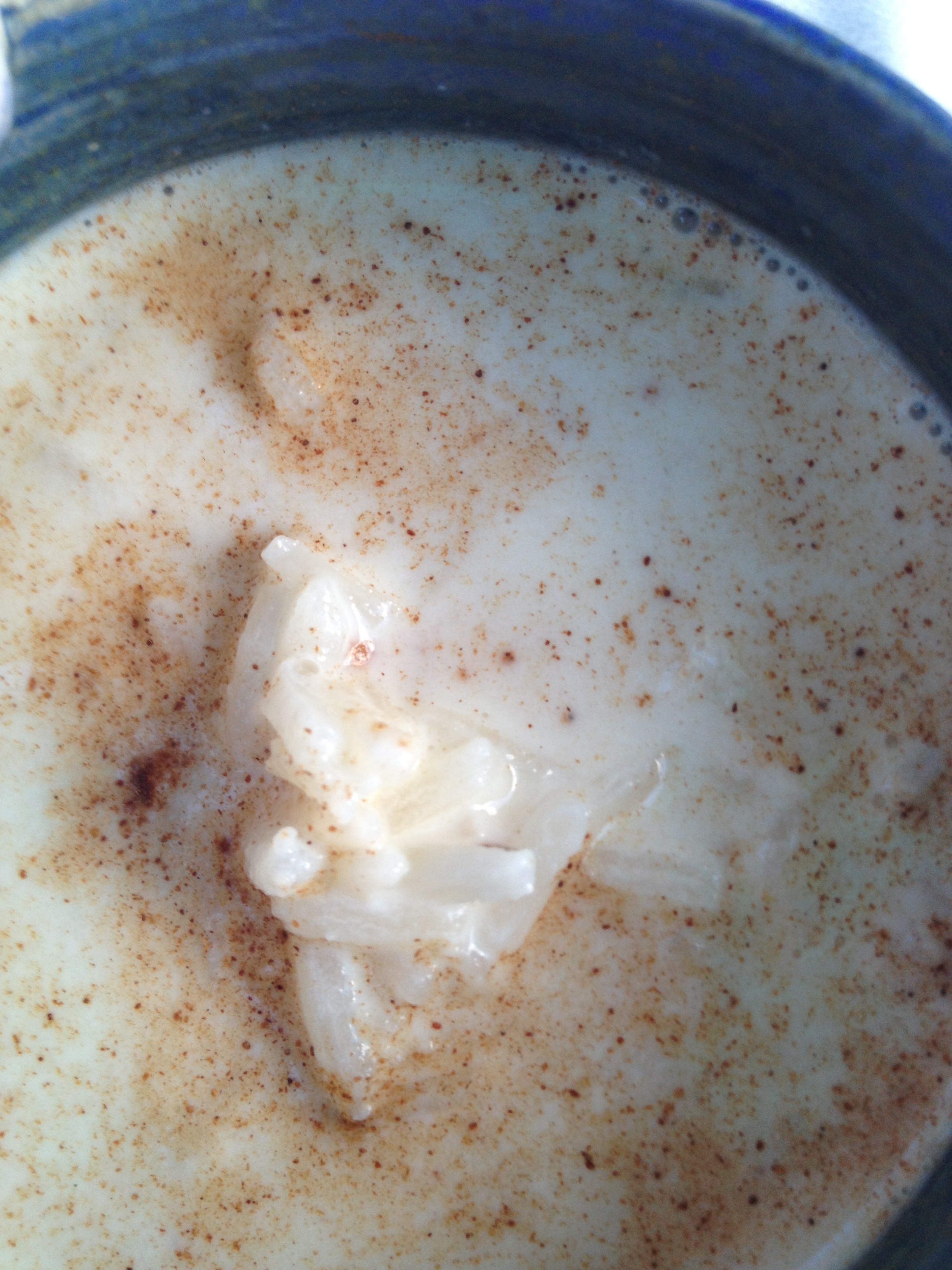
Serve in cups and sprinkle ground cinnamon on each of them. If you like. you can add ground coconut on top. This dish goes really well with a piece of biscocho. Enjoy it!

Picante de Pollo

Picante de pollo

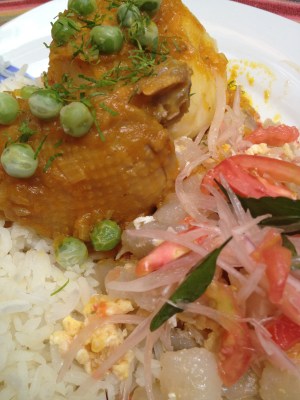
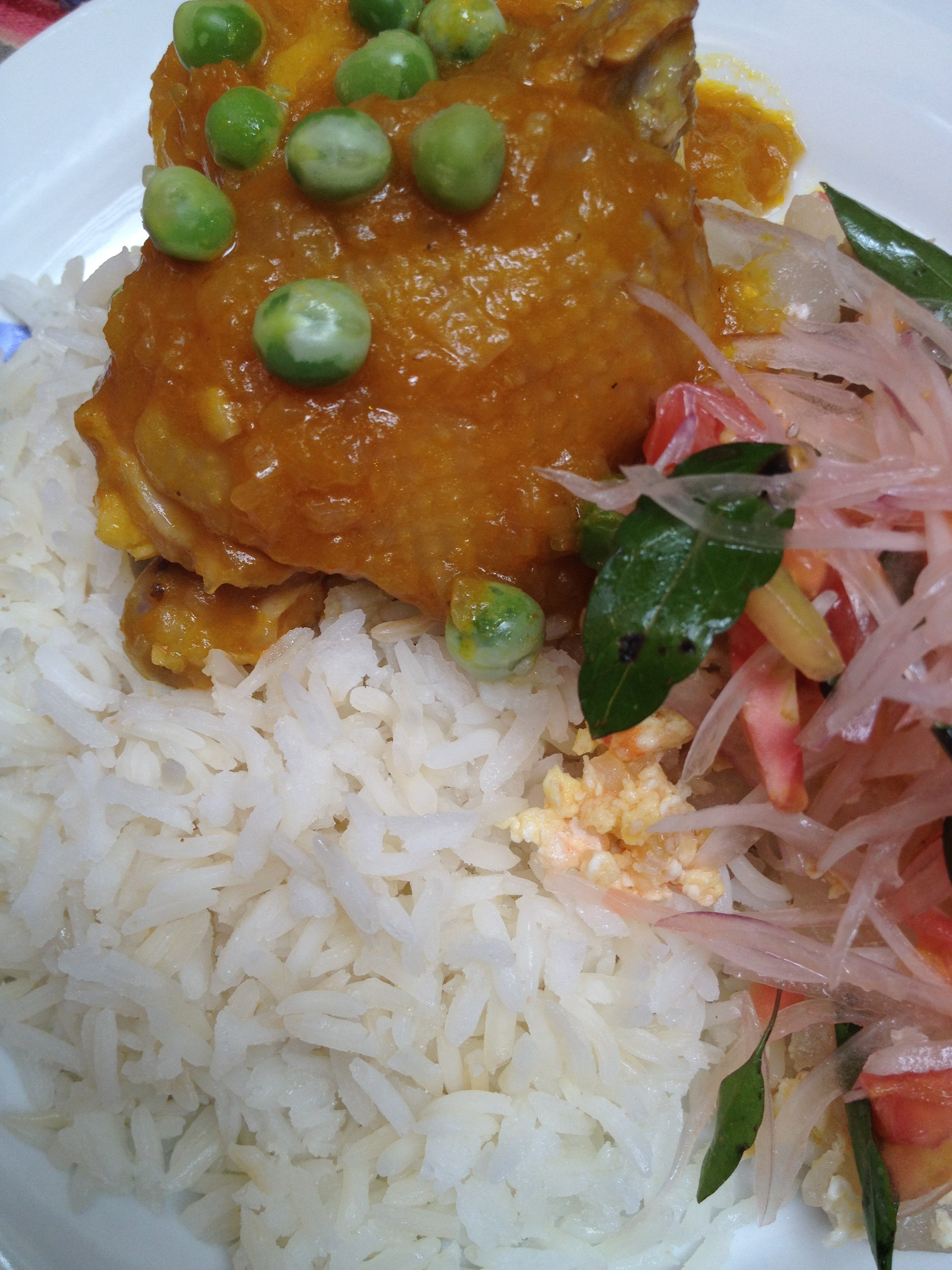
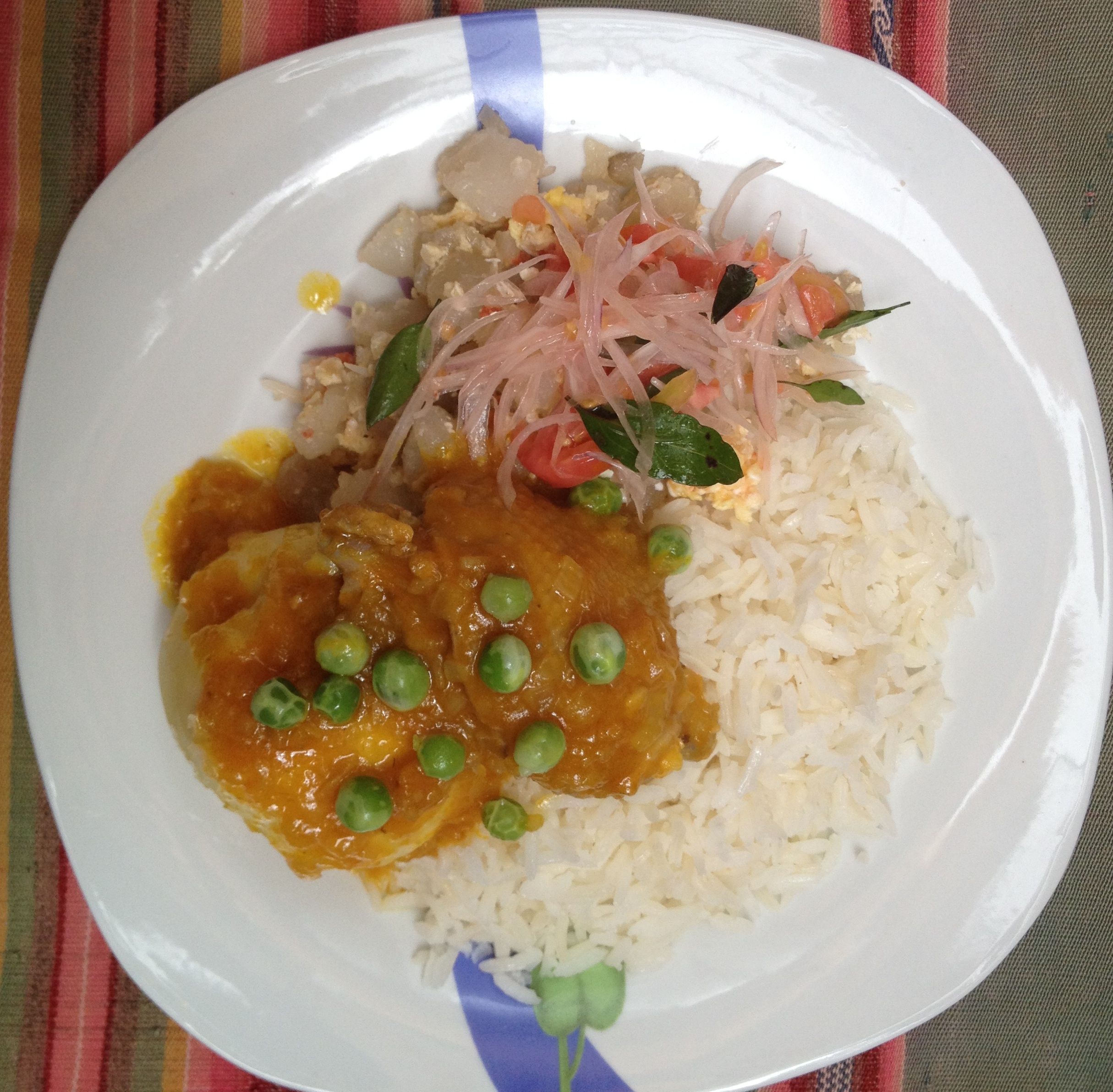
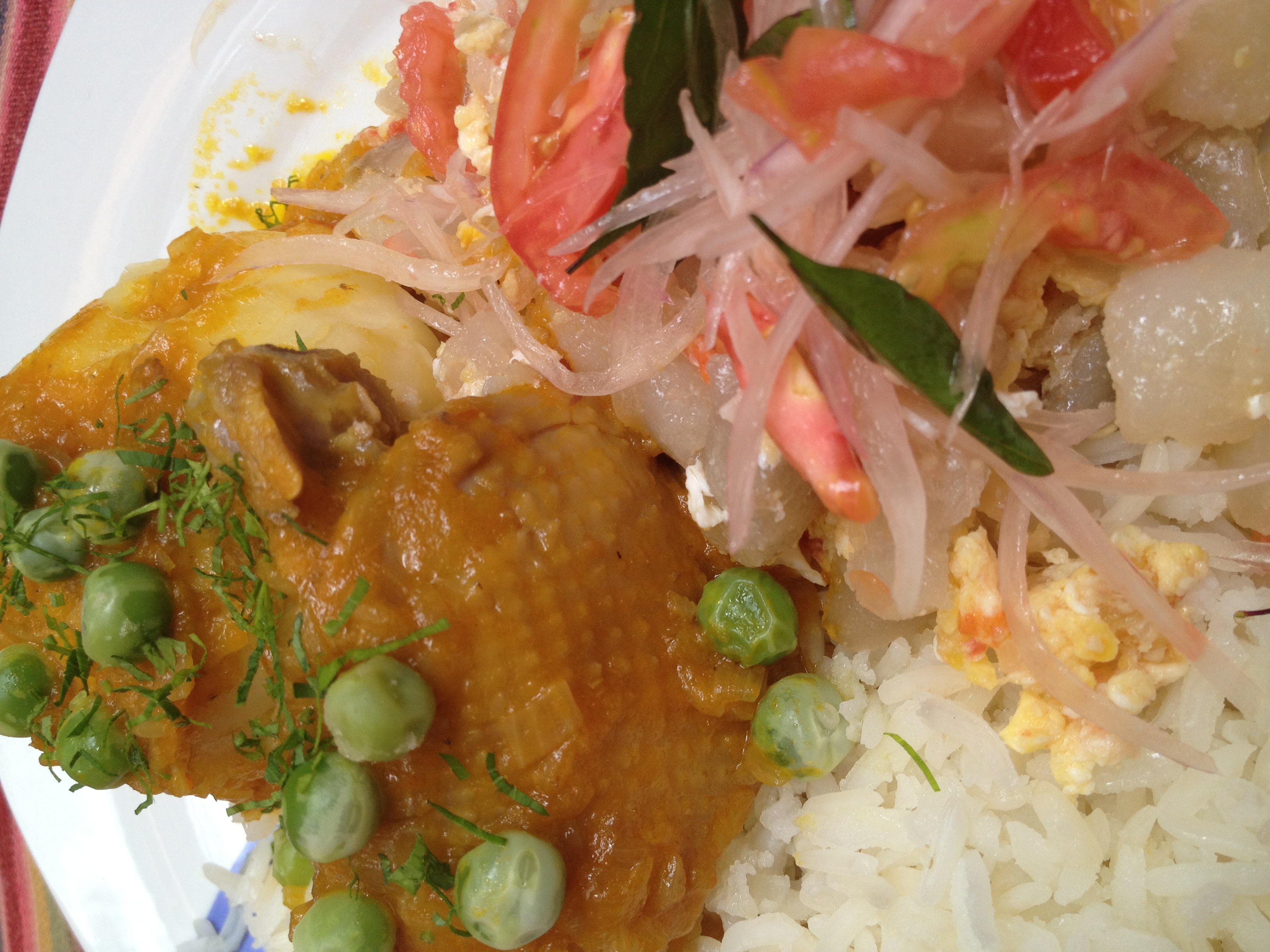
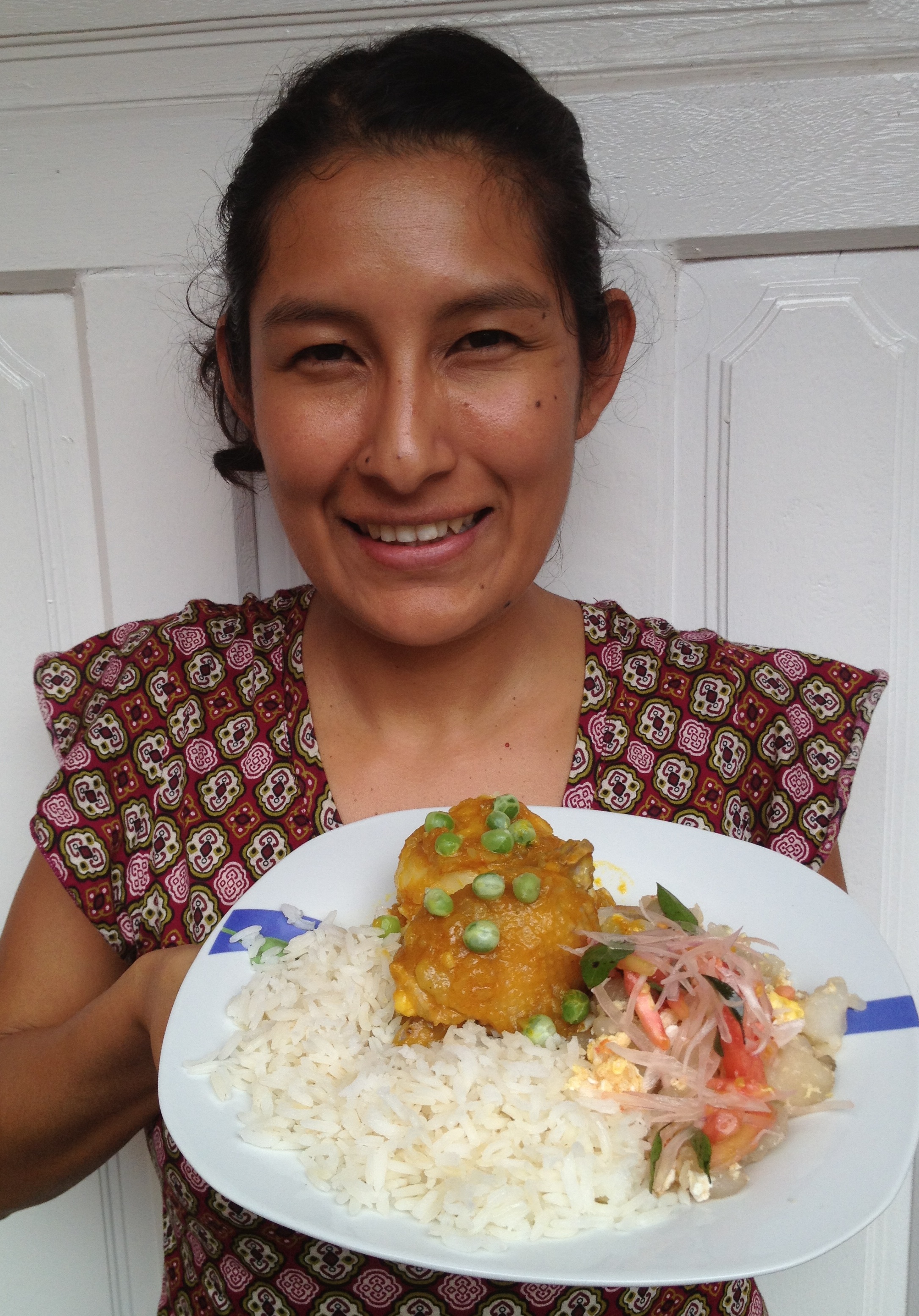
My Mom and I have shared the kitchen since my earliest memories. It is the place were we can understand each other, since some of our Bolivia dishes take more than an hour to be cooked. Today she helped me to improve my récipe for the Picante de Pollo. The first time that I cooked this recipe in Maine was for some friends of my husband’s. They loved it but I knew that something was missing. So my Mom and I sat together and reviewed the récipe step by step. Finally, with her looking over my shoulder correcting my seasoning, we finally had the perfect dish for her and for me. It takes a little time to cook and you may not have some of the ingredients like chuño. You can find aji in Asian markets or any Latino stores. Enjoy! Disfrutenlo!

Serves 8

Cooking time 2 hours

Tips: I will describe this by the ingredients that are in the dish. It seems to take a lot of time but it’s really very fast and easy. While we are boiling the  aji Amarillo, we can cook the rice and get the potatos ready. While the chicken is being cooked, get the Chuño ready, and if you do not have chuño, you can start with the garnishing.

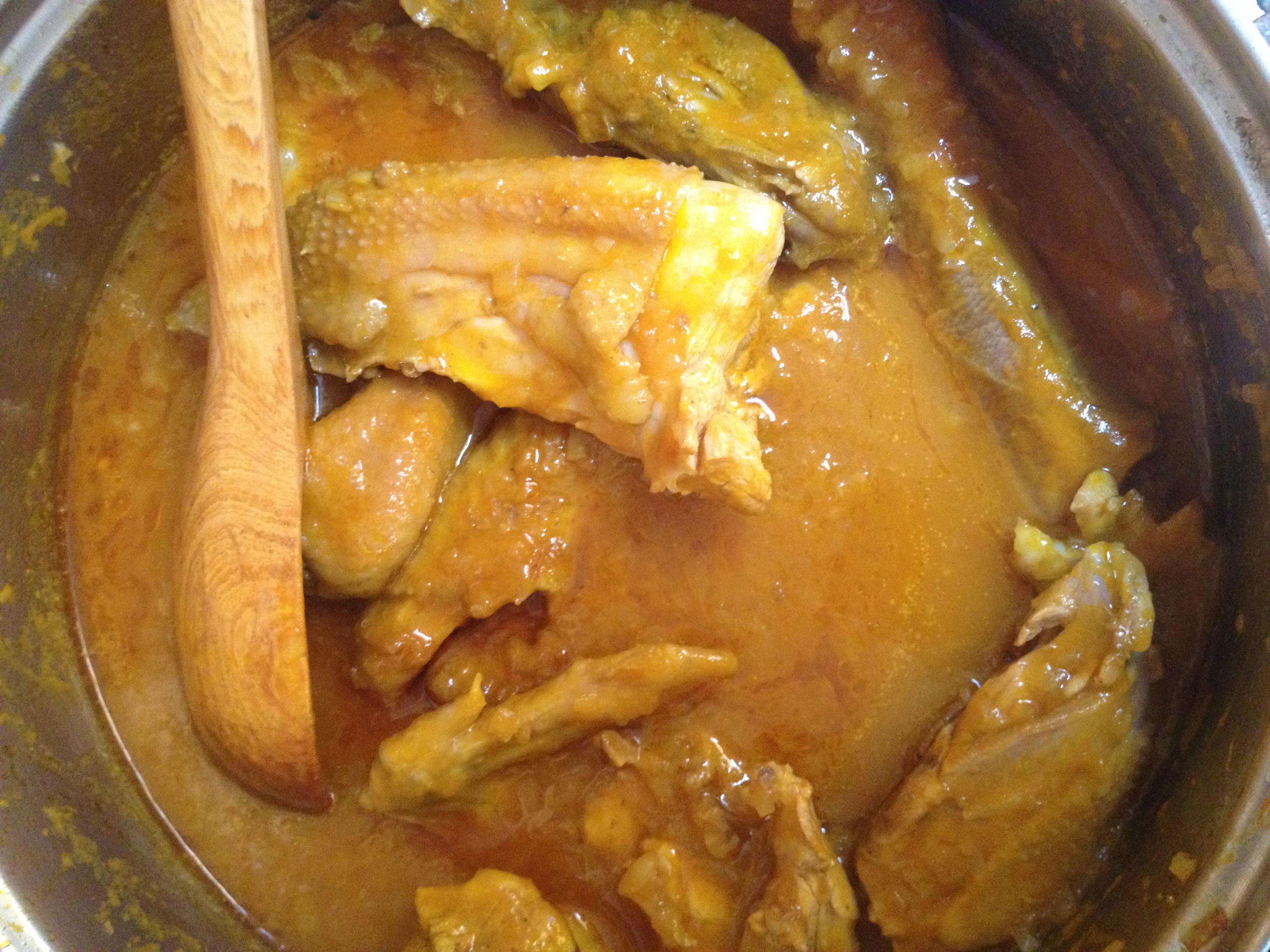
Spicy Sauce with chicken

Ingredients:

8 chicken legs with thighs

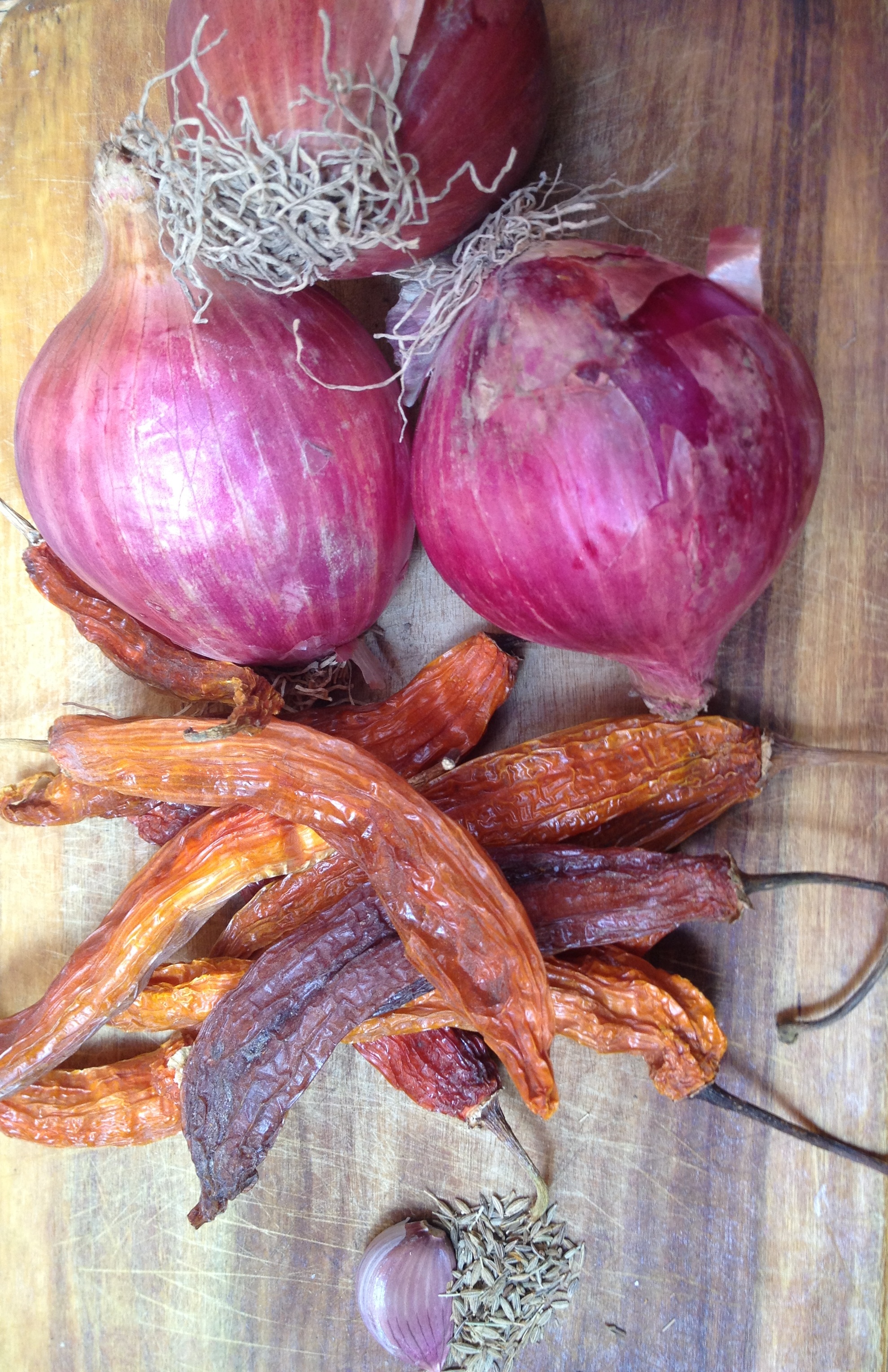
12 dry yellow peppers

2 cups of water

3 large red onions diced really small

4 cups of chicken broth

1 garlic clove

1 tsp cumin

¼ cup Oil

Put together the ingredients:
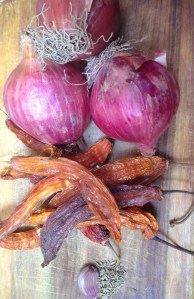
We need to ready the spicy sauce for the chicken. It is a really easy and simple to make. I recommend having it ready in advance, so it saves you some time since you can freeze this spicey sauce.

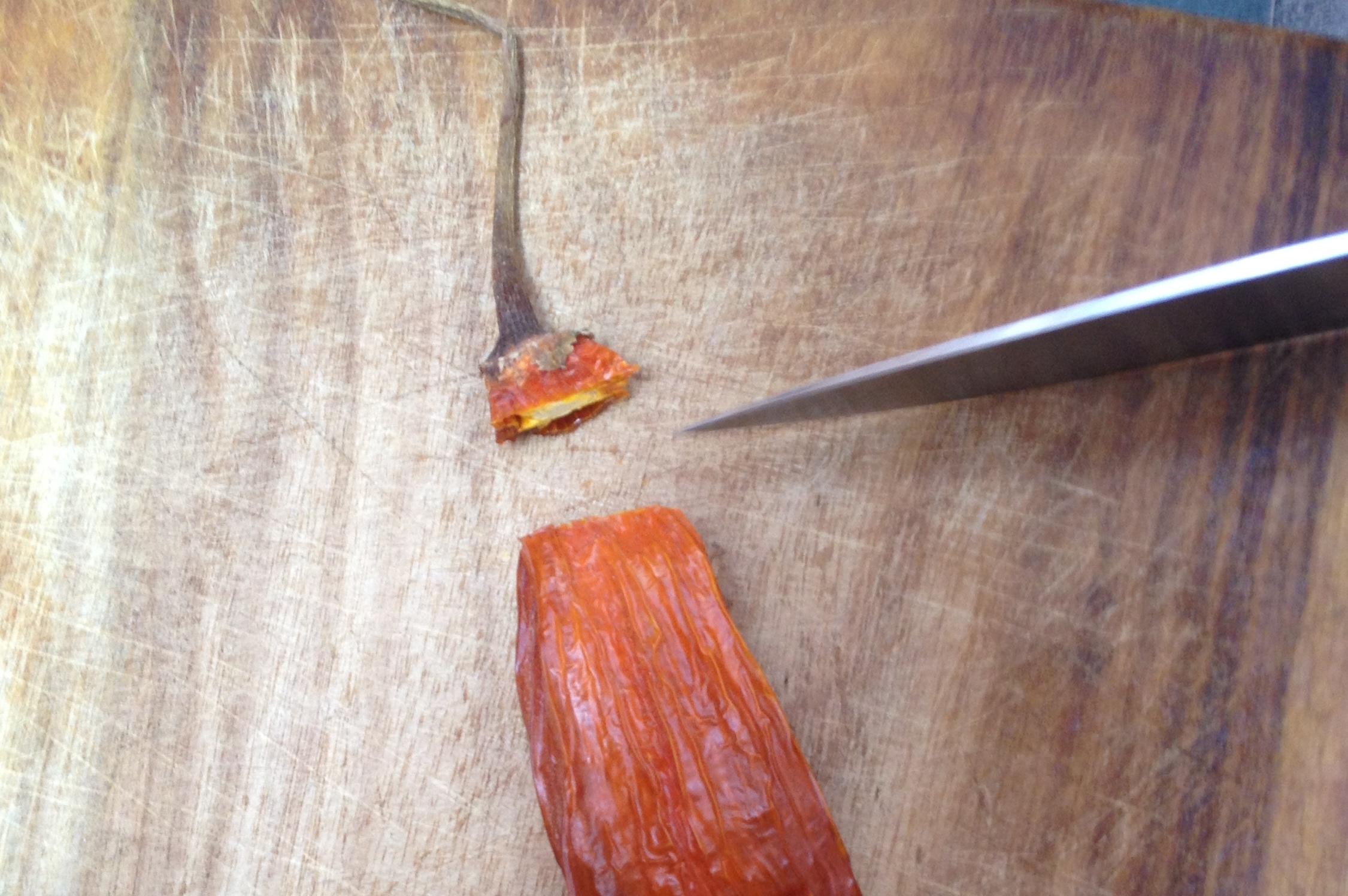
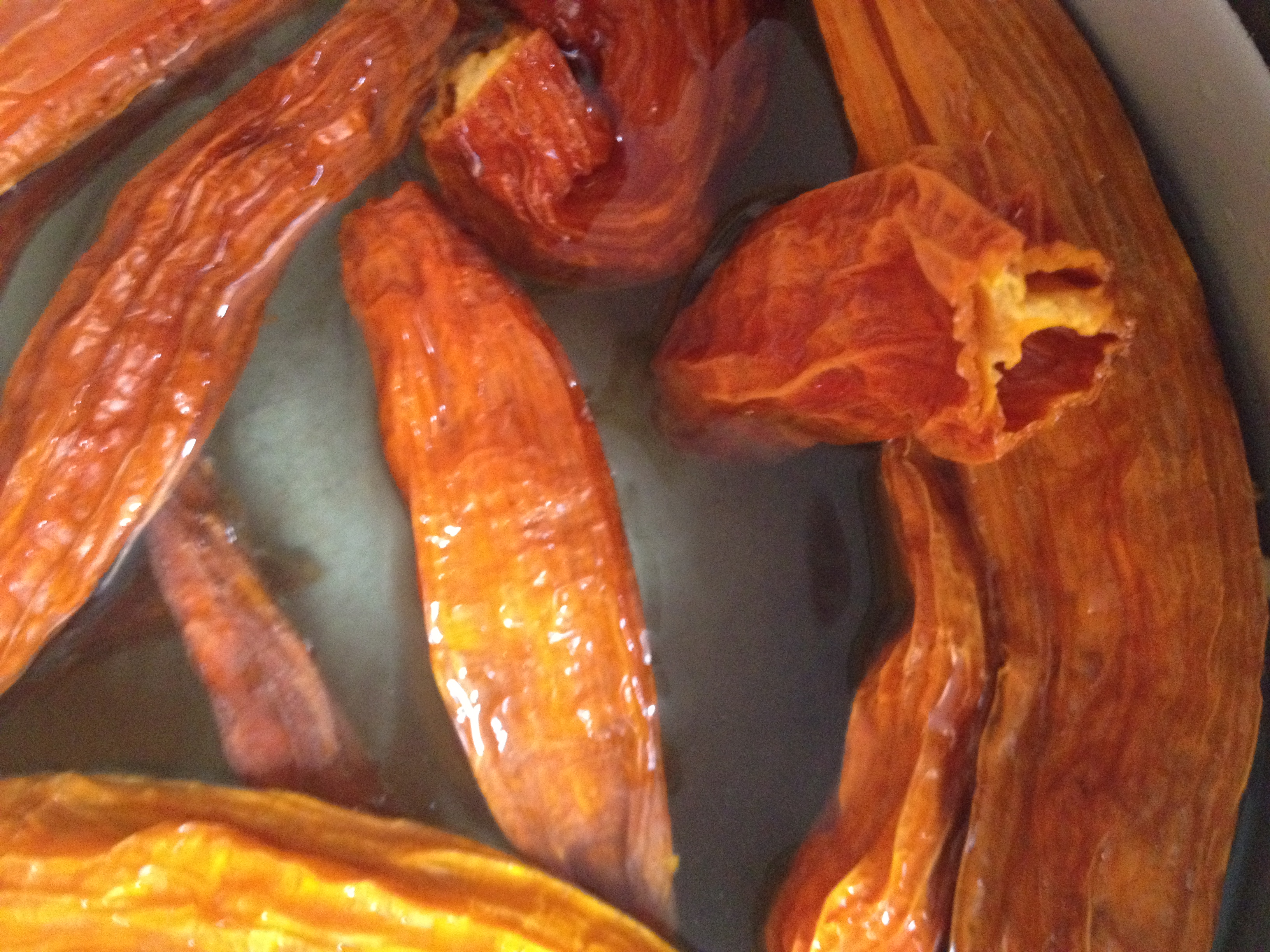
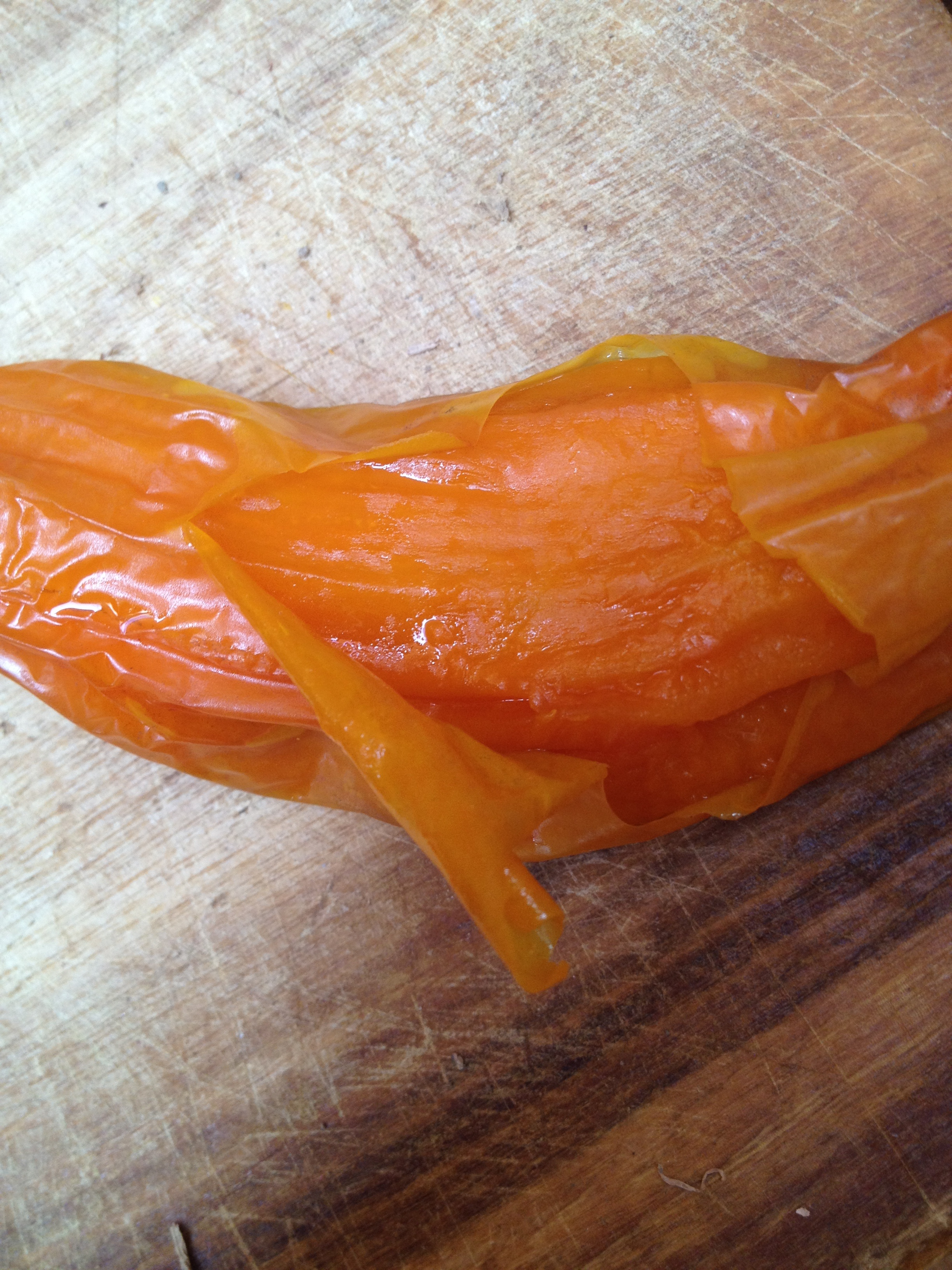
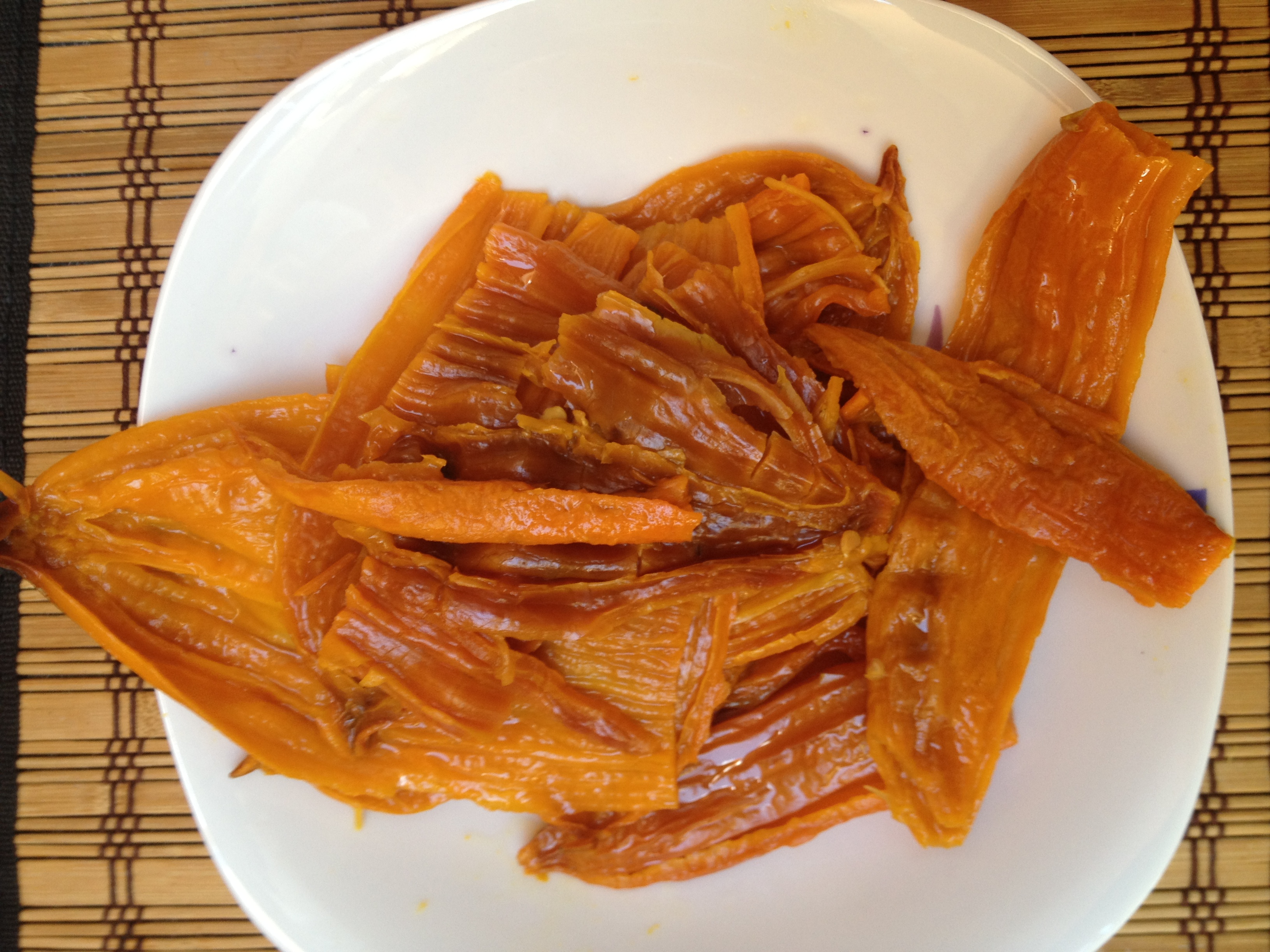
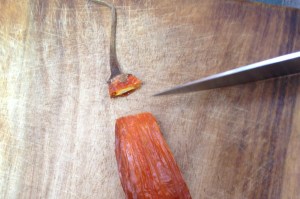
Cut the heads of the dry yellow peppers, remove the stems. Put them in water and let them boil for about 30 minutes. You will see the skins of the peppers start getting loose. That is when you know that they are ready.
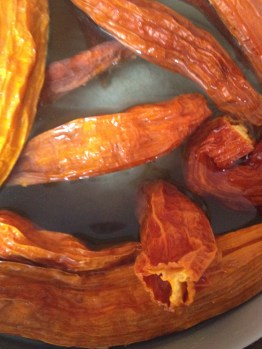
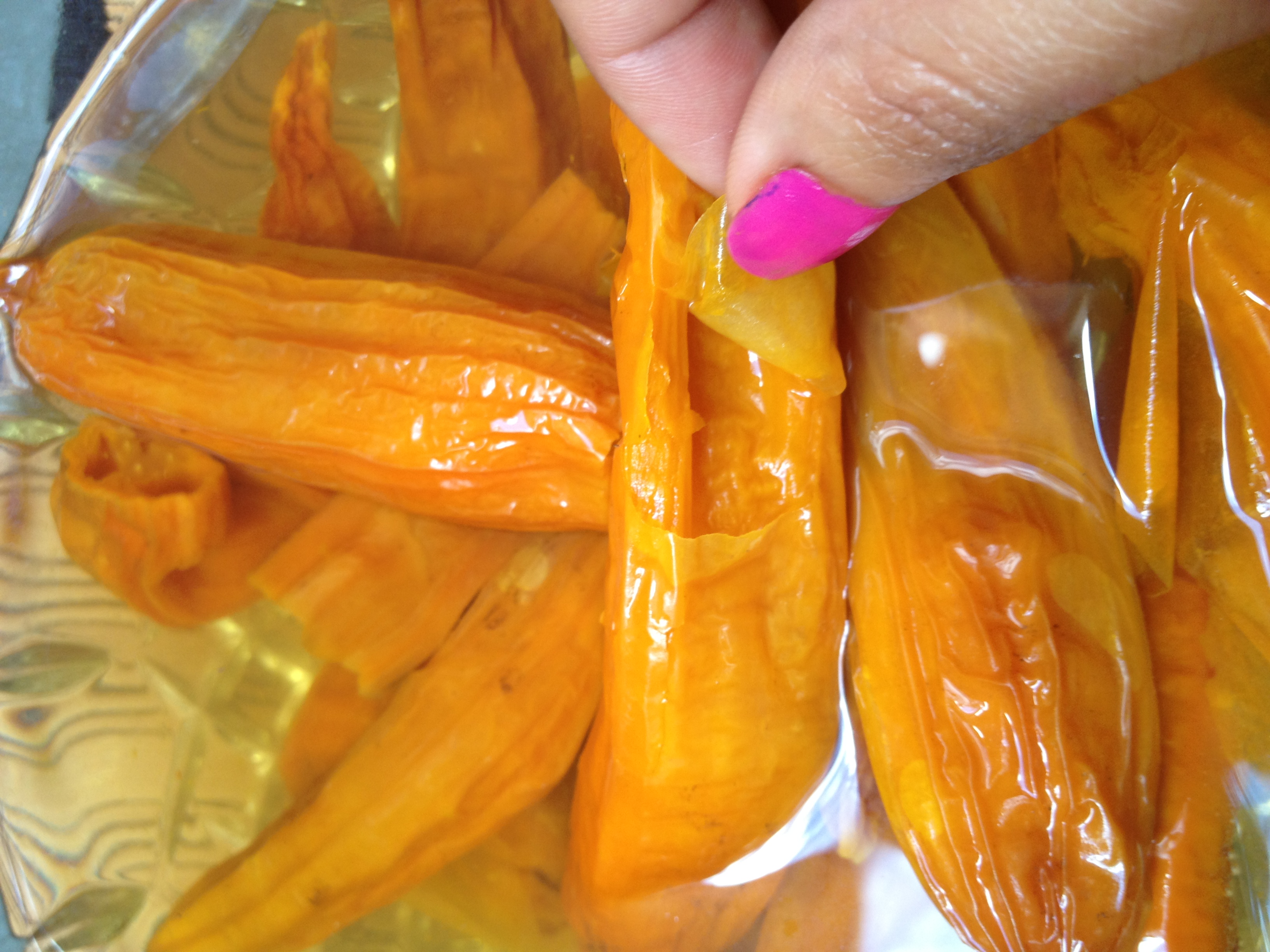
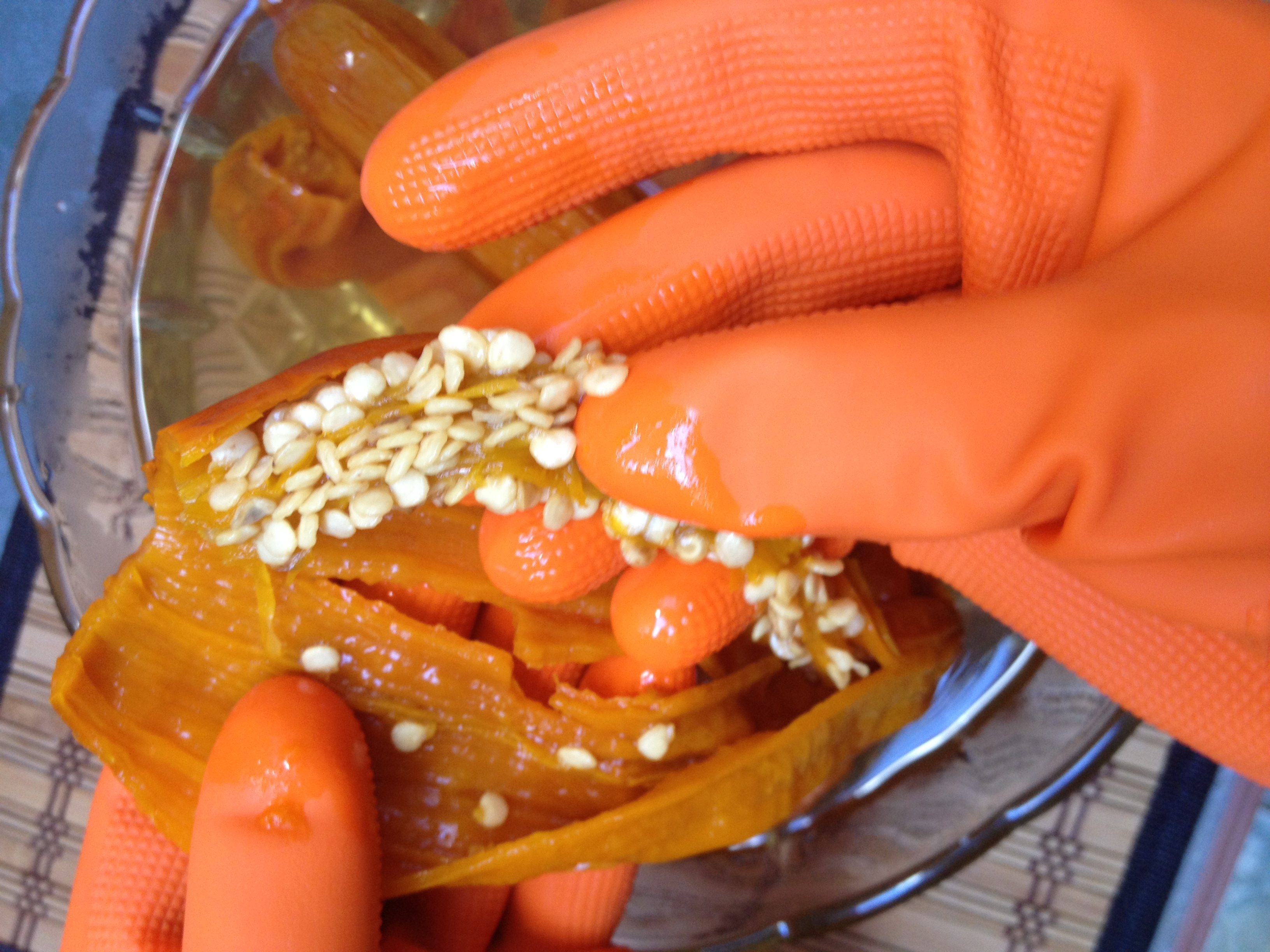
Take the peppers out of the hot water and put them in cold water. Take the skins off and the seeds (we recommend doing this with gloves).
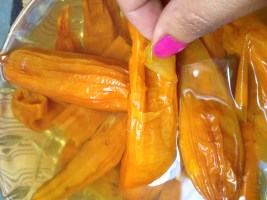
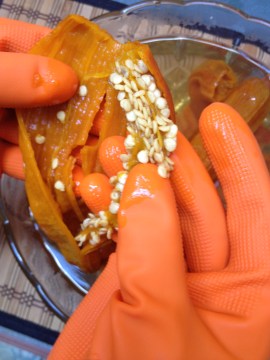
It is important to take the skins off the peppers because they are so hard to grind and hard to cook. Yellow peppers can be very spicey that is why we need to take the seeds out and leave them very clean.
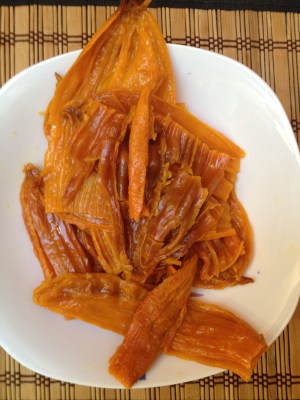
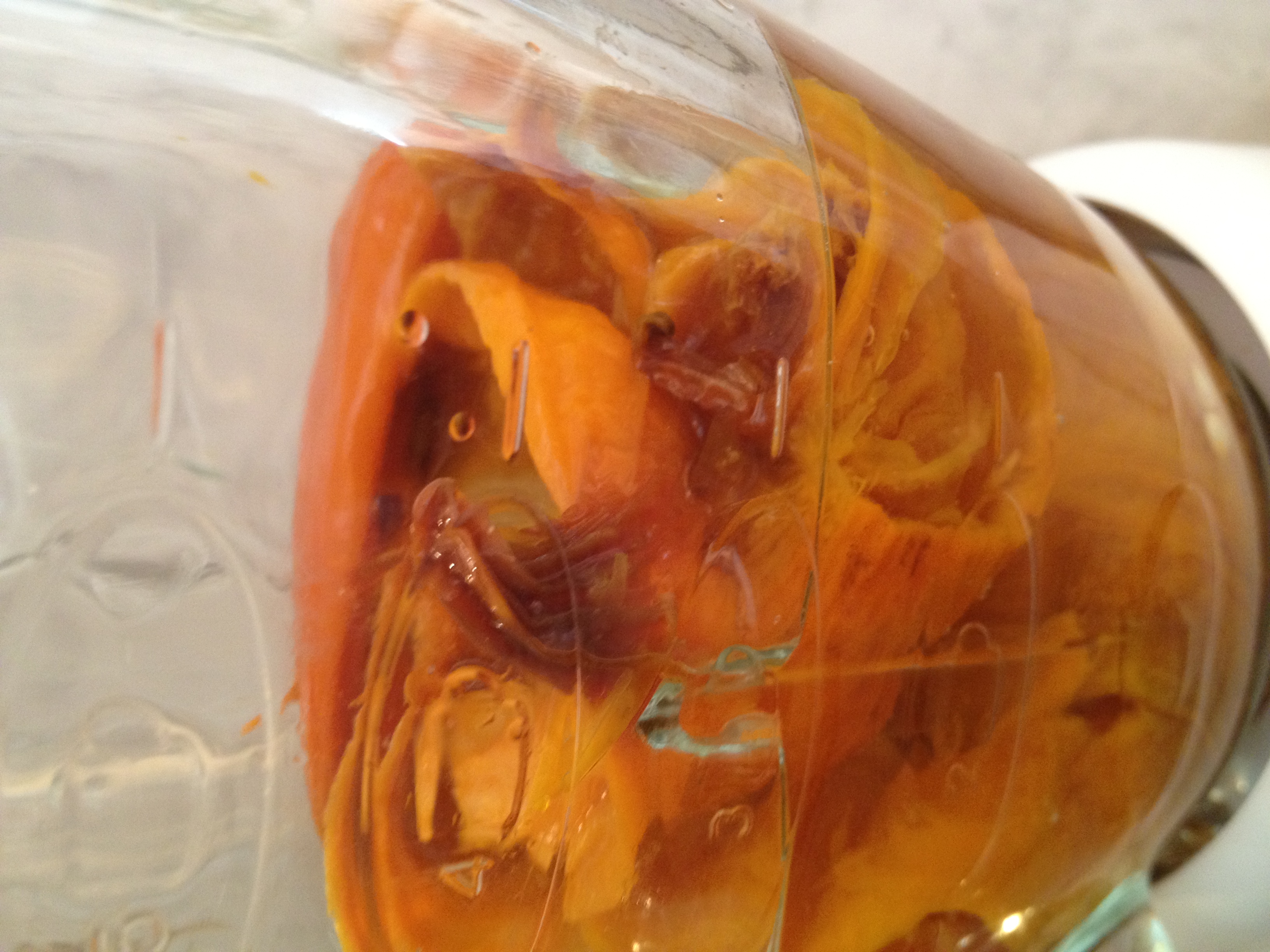
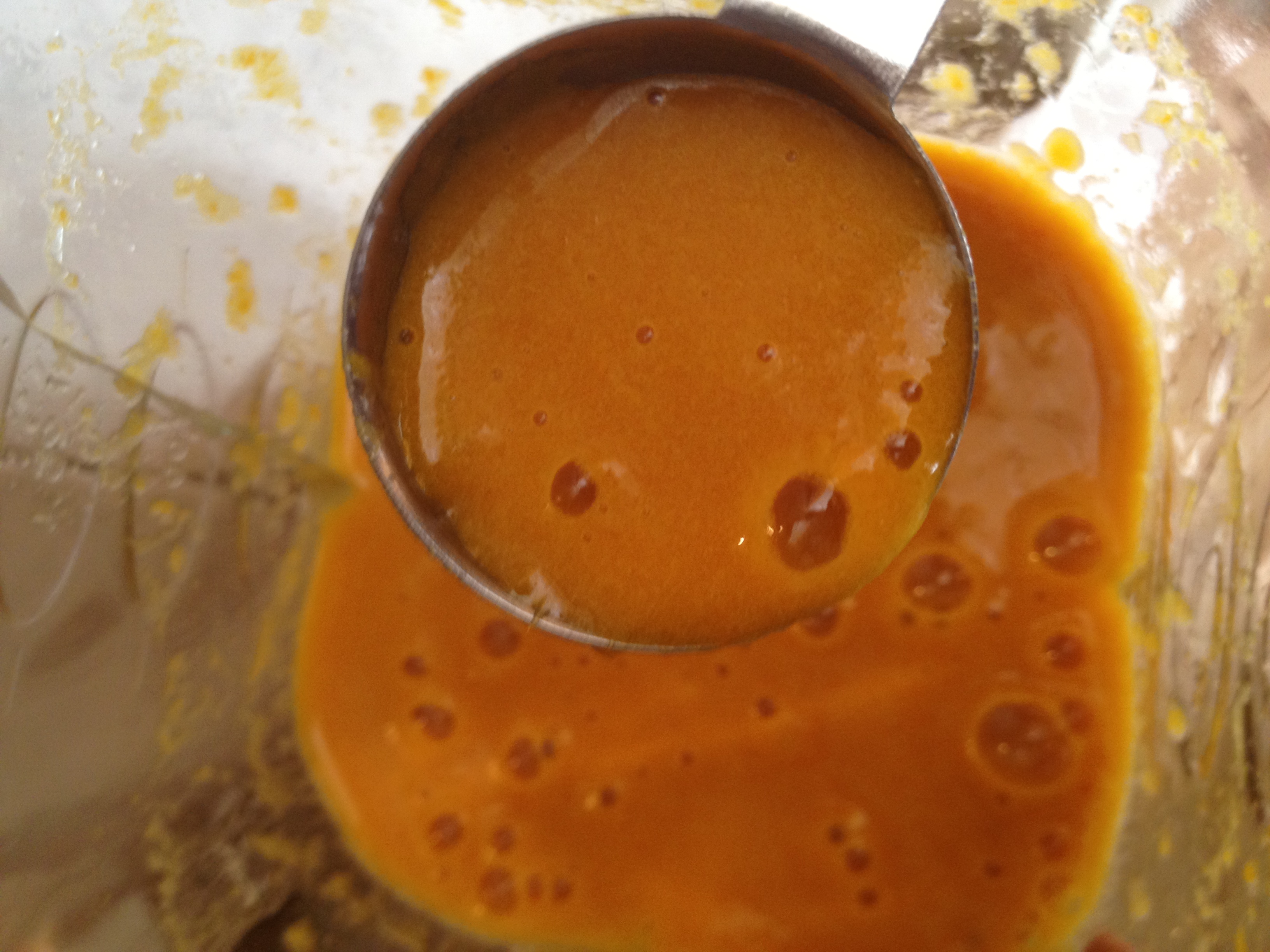
Once that they are peeled and without the seeds, put in a blender with 2 cups of water and blend for about 2 min until very smooth. Set this aside since we will add this preparation to the onions.

We can do this sauce in advance and freeze it, it freezes really well. I always do big batches and freeze it to have it ready when I need it since this sauce is used in other dishes.

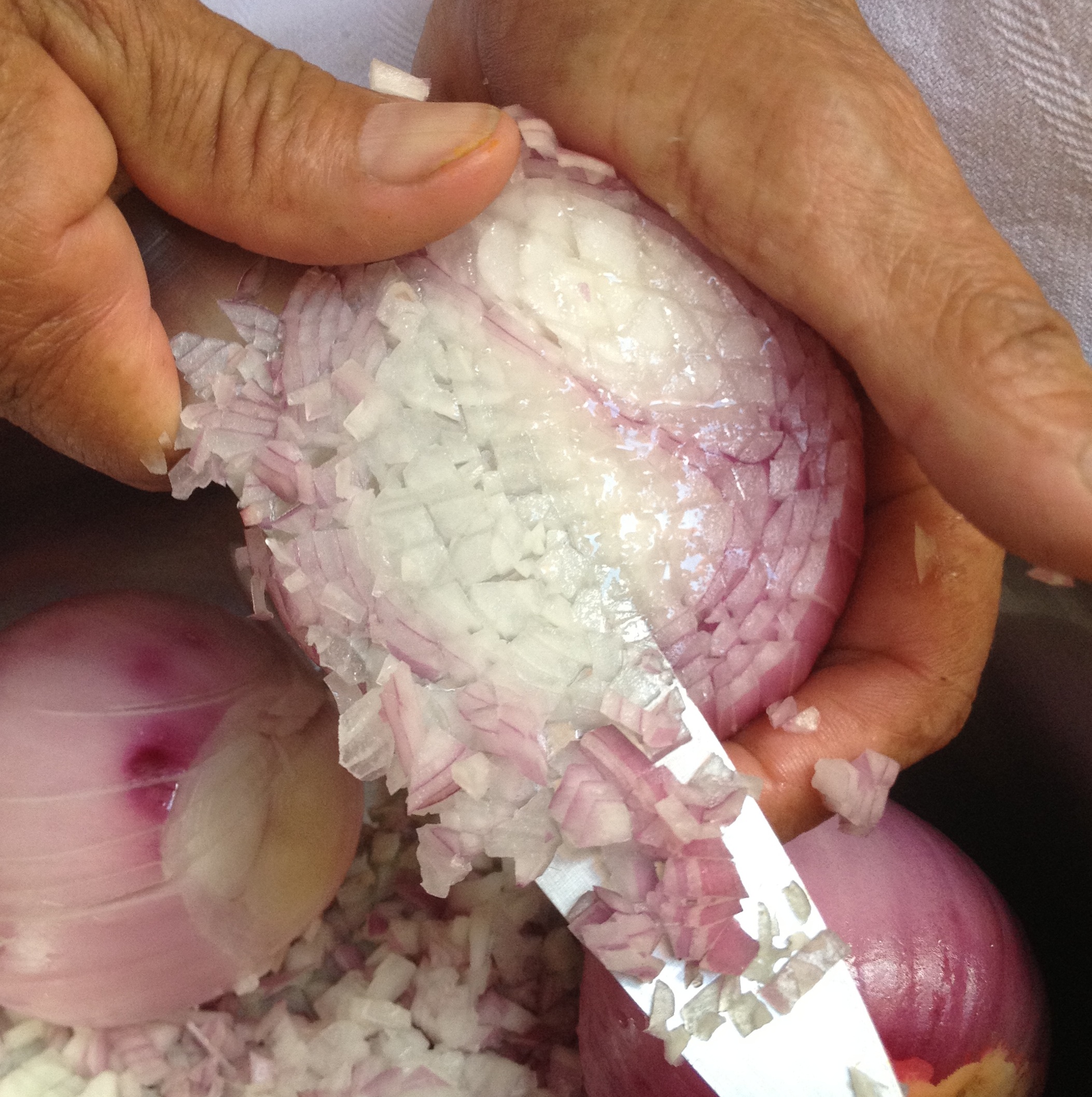
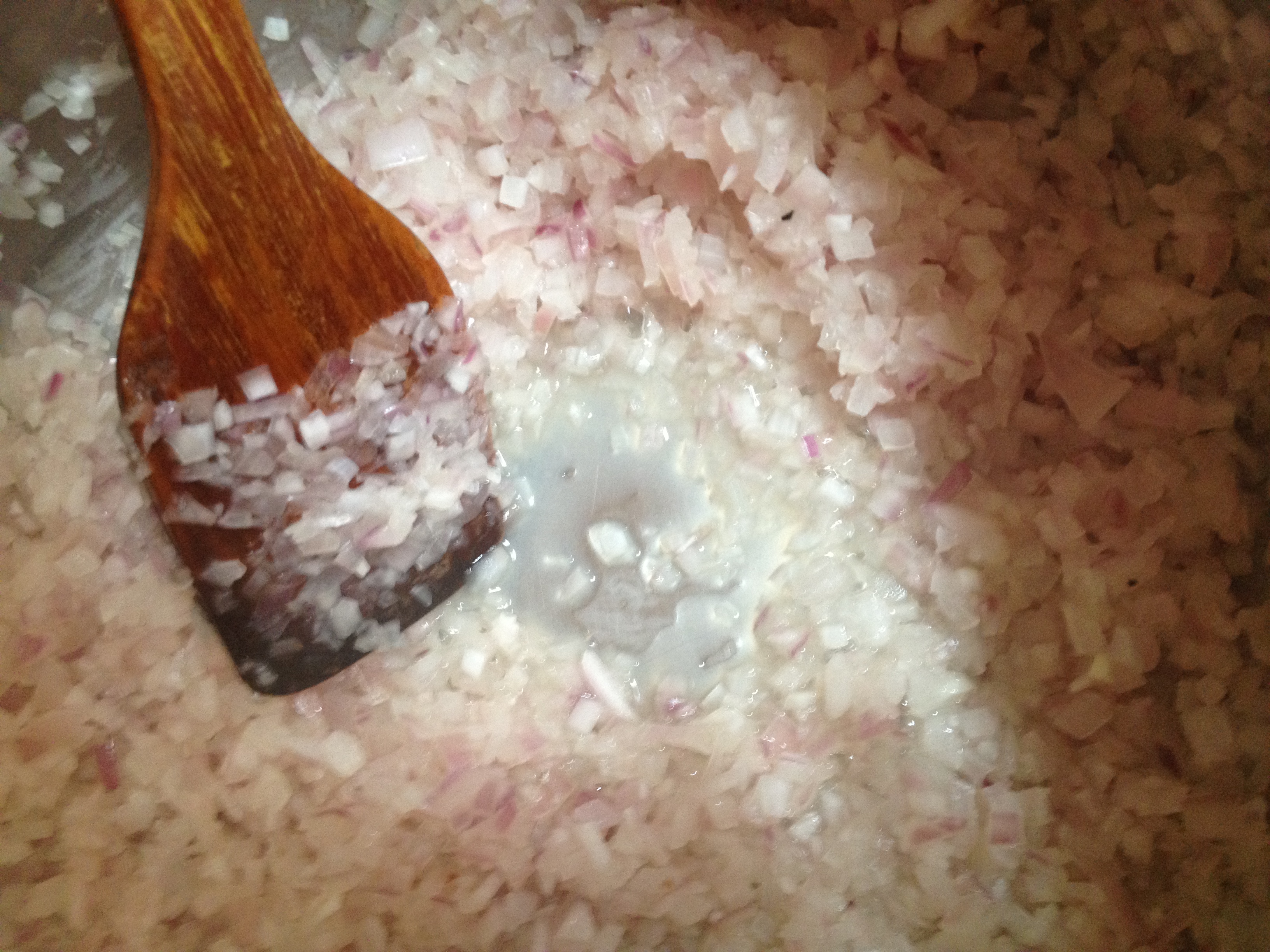
Meanwhile, chop the onions really small put them in in a large pot and cook for about 5 min. Add 2 tbsp of salt and cook until it dries. Add the oil and cook until it is dry again.
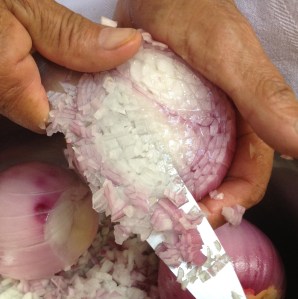
The onion part is very important! It really needs to be finely chopped since the onion will give the thickness to the sauce. I also just cook it with the oil directly, but my Mom told to cook the onion just with the salt first and once that starts drying, add the oil and cook until it is dry again.
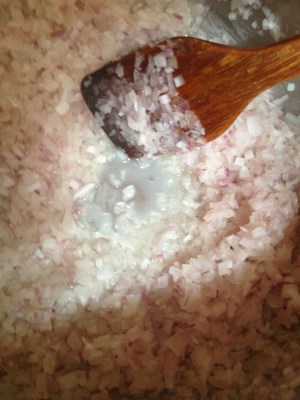
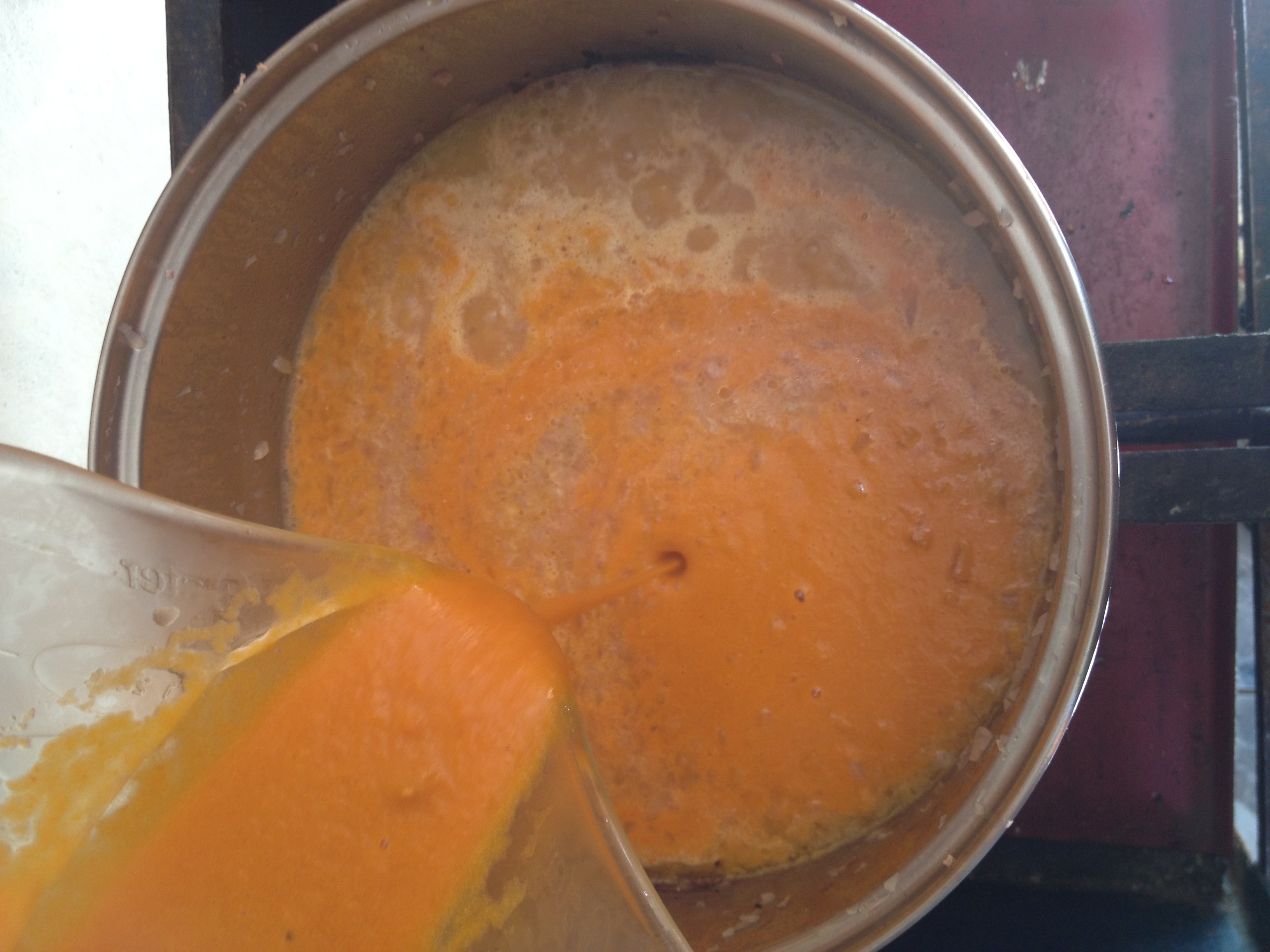
Once that is dry, add 4 cups of chicken broth or just water. Let it cook for about 10 min and add the yellow pepper sauce.
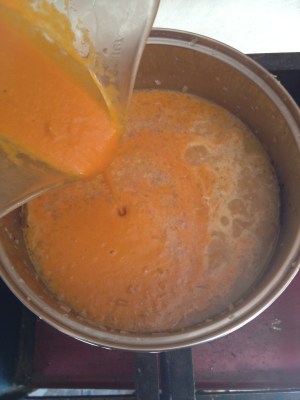
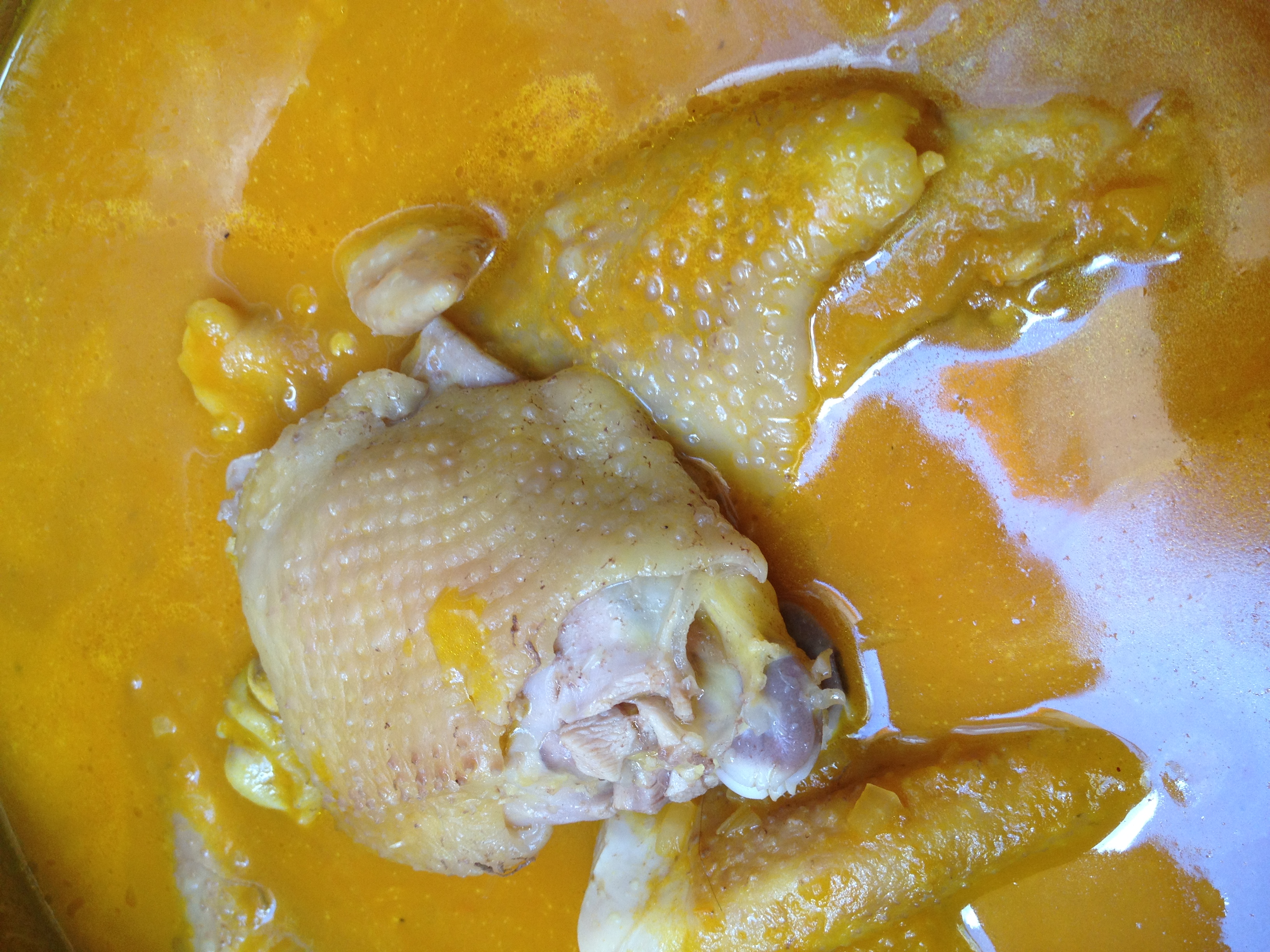
Meanwhile, grind the garlic with the cumin in a morter until it is very smooth. Add this preparation to the onion and yellow pepper sauce. Let it cook for about 15 min  until the onion is well cooked and soft. My mon says the best way to know is when the onion starts sticking slightly in the bottom. Add the chicken at this moment, and reduce the heat to low. Let it cook for around 20 min  until the chicken is tender, stirring from time to time so it doens’t burn on the bottom.
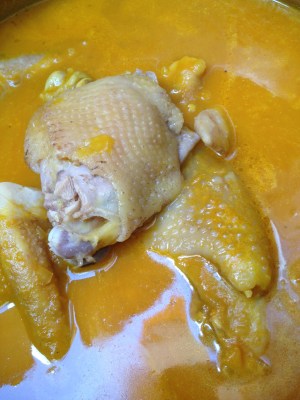
Is very important that the sauce doesn’t dry to much and the chicken is not too overcooked. The sauce is thick enough and the onions are well cooked if you can barely see them in the sauce.

 Cooking the Rice:

1 1/2 cups rice

1 garlic clove

2 tbs of oil

3 cups of water.

1 tbs salt

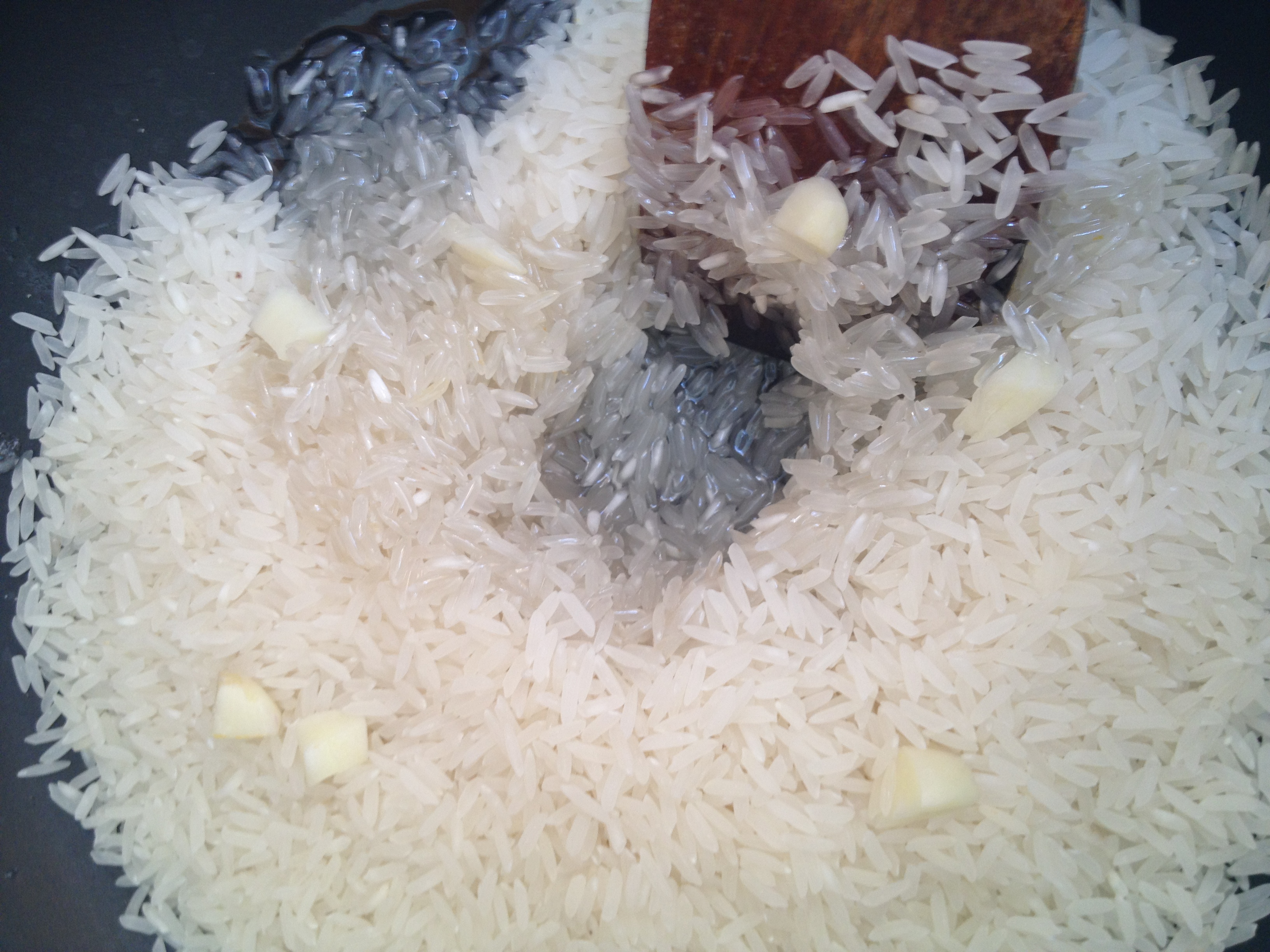
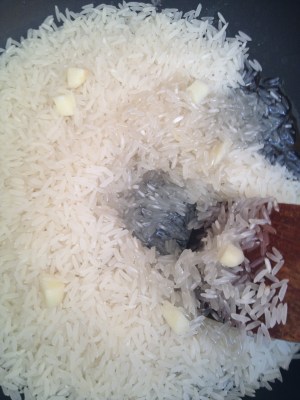
Heat a frying pan and add the rice and peeled, diced garlic and the oil.

Pan fry until the rice turns dark white. Move rice constantly.

Boil water and cook the rice as regular rice.
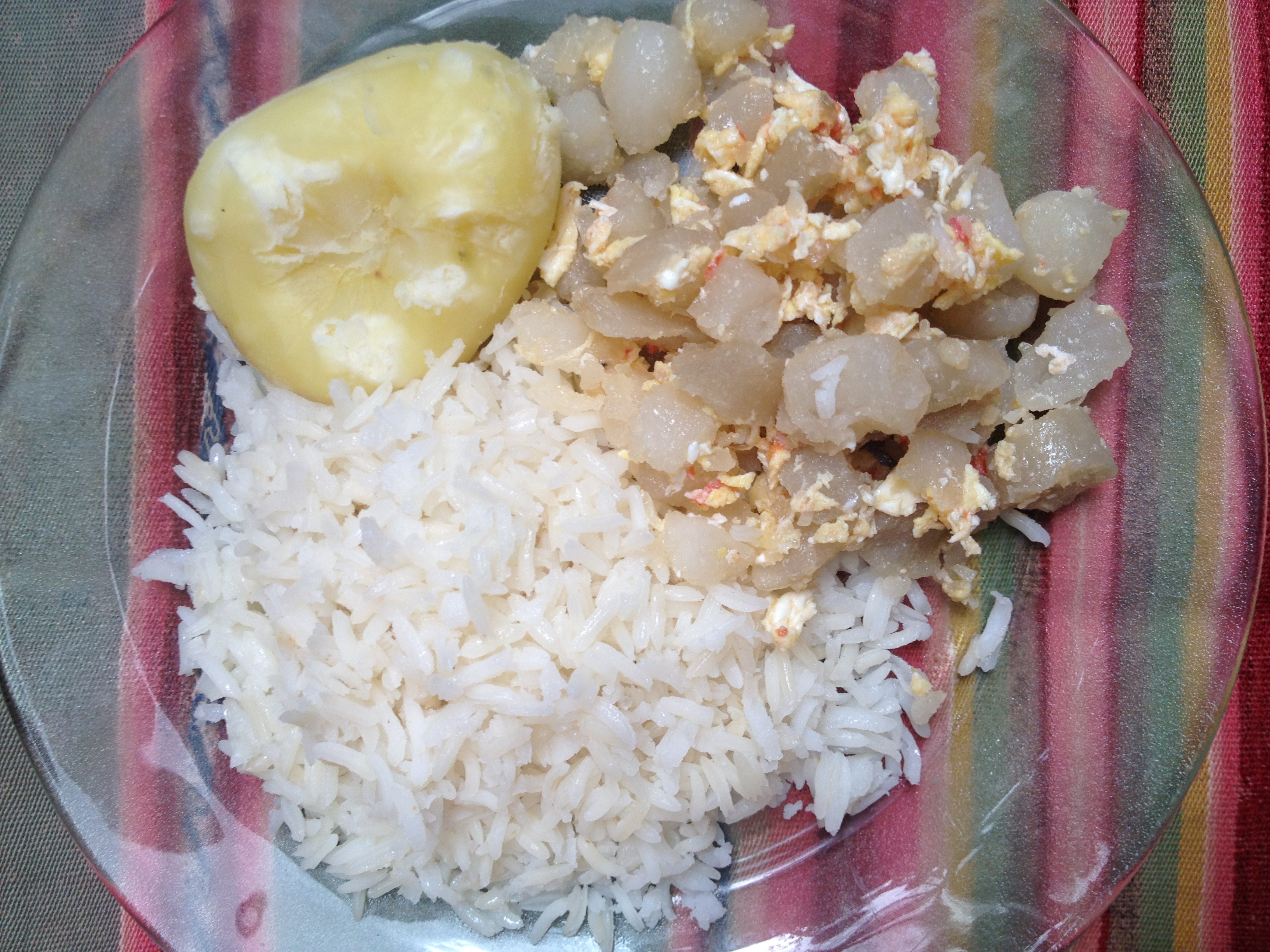
Cooking the Chuño

4 cups of chuño

6 cups of water

2 1/2 tsp salt

1 small onion

1 small tomato

3 eggs

¼ cup oil

1 ½ tsp salt

Chuño is really hard to find here in Maine, but basically is frozen potato that has been dried in the sun. You can skip this step since chuño is an acquired taste, probably like lobster was for me when I moved to Maine for the first time.

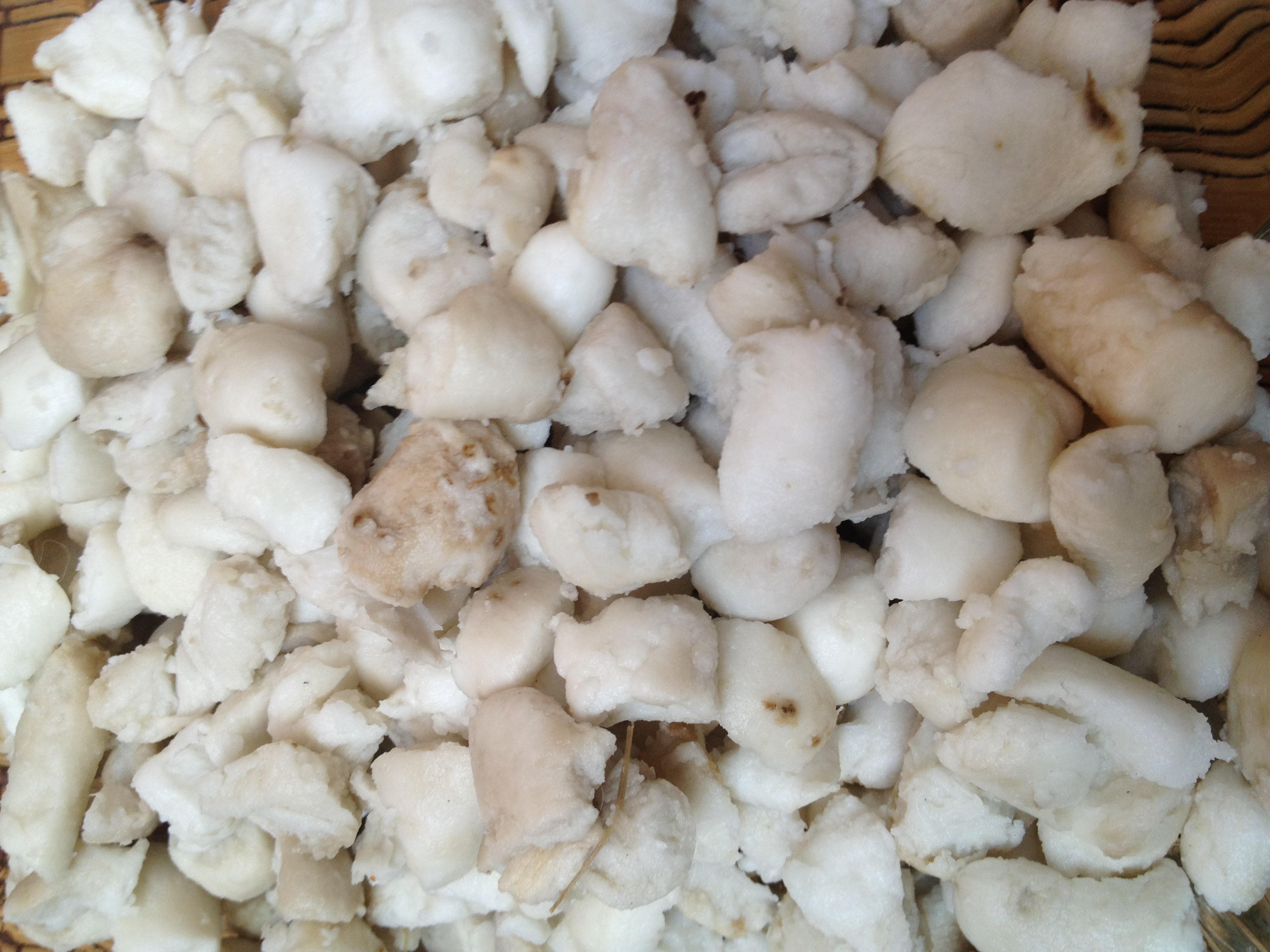
If you find Chuño, it will be dry. You need to let it soak all night and next day, break it into pieces with your hands. Once that the chuño is in small pieces. Wash it the times in water to take out the spicey flavor.

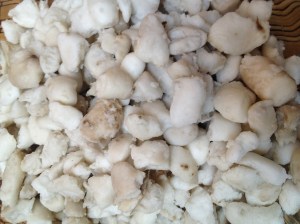
Put water to boil, add the chuño and the salt. Cook for about 20 min. Rinse and set aside. You will see that the color of chuno changes from milky white to clear dark.

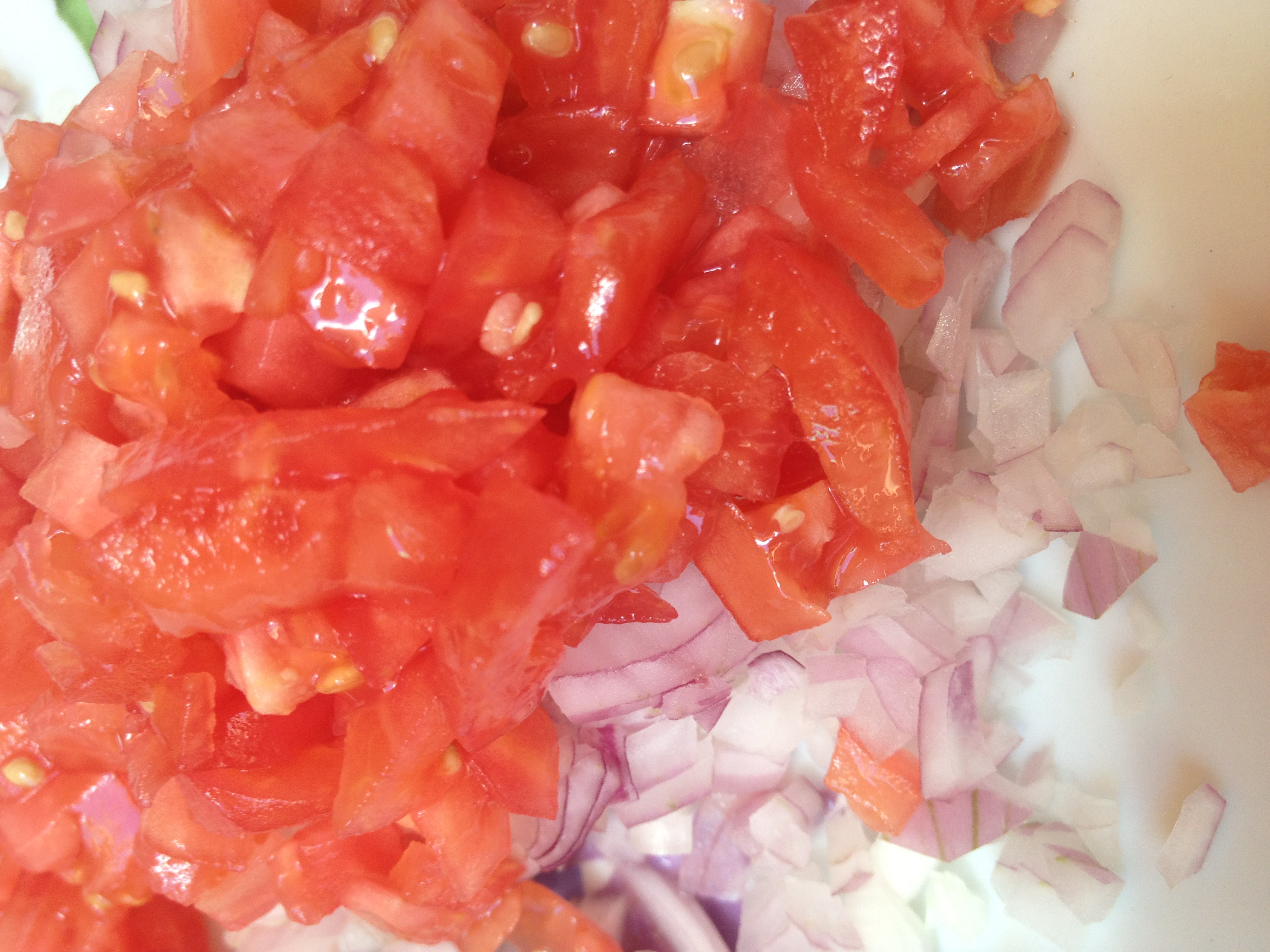
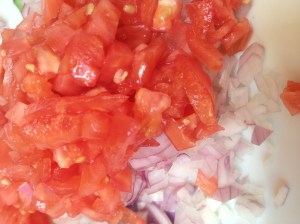
While the chuño is cooking, dice the tomato and onion.

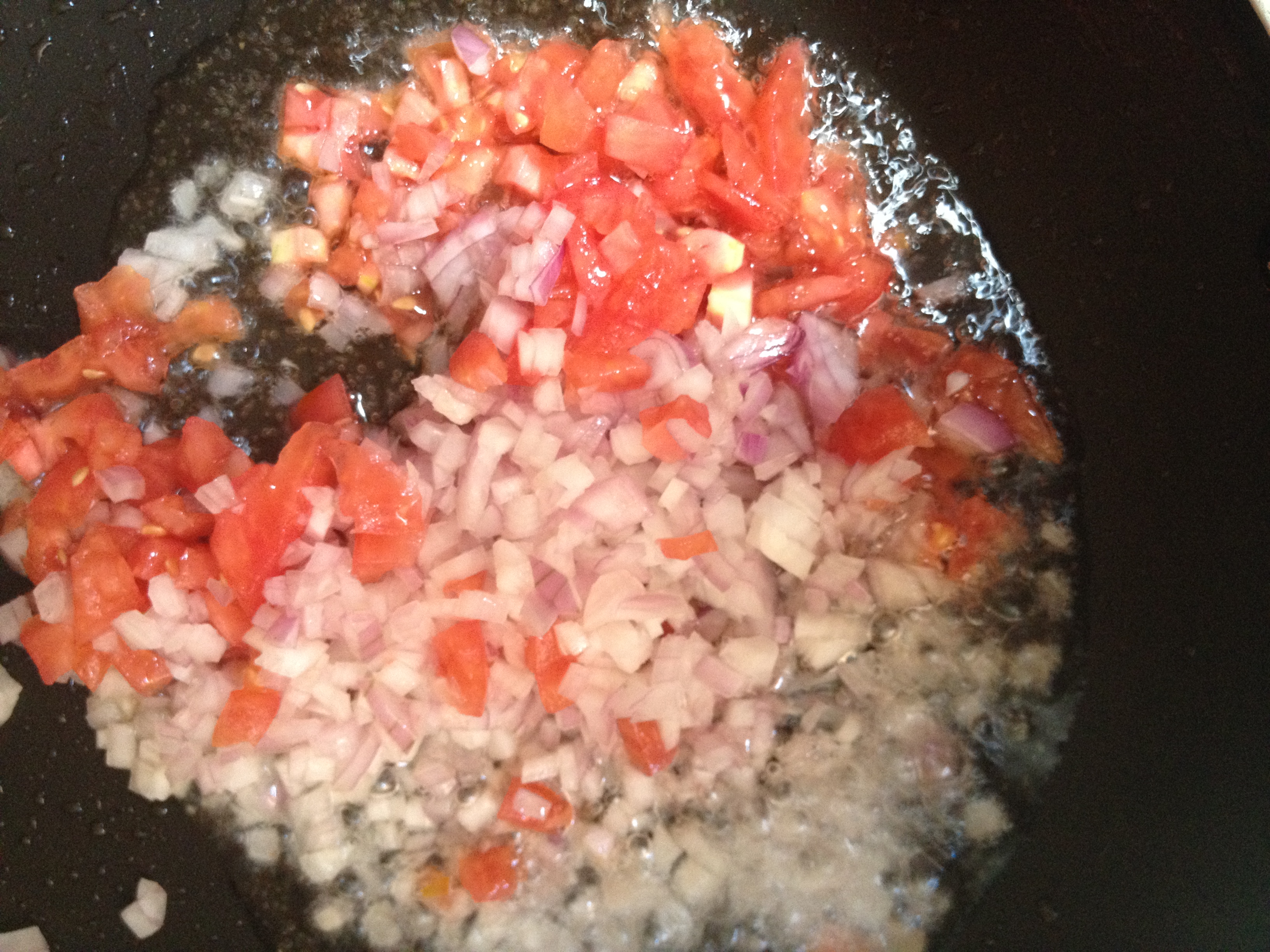
Cook the onion and tomato with the oil and salt. Cook until onion looks wrinkly.
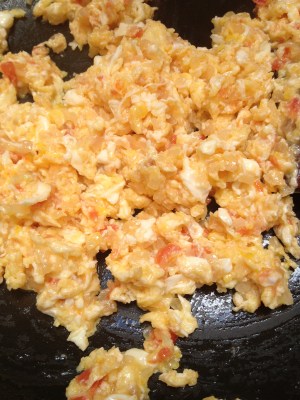
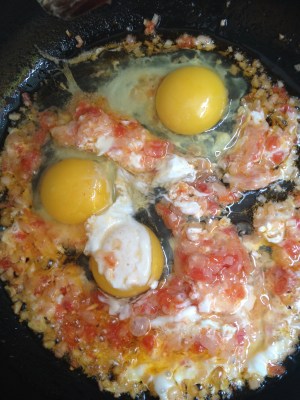
Add the eggs and like making scrambled eggs until the eggs are hard.
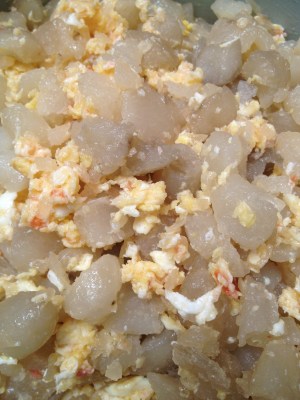
Put this egg mix to the chuño and set aside.
Cooking the Potato

8 red large potatoes

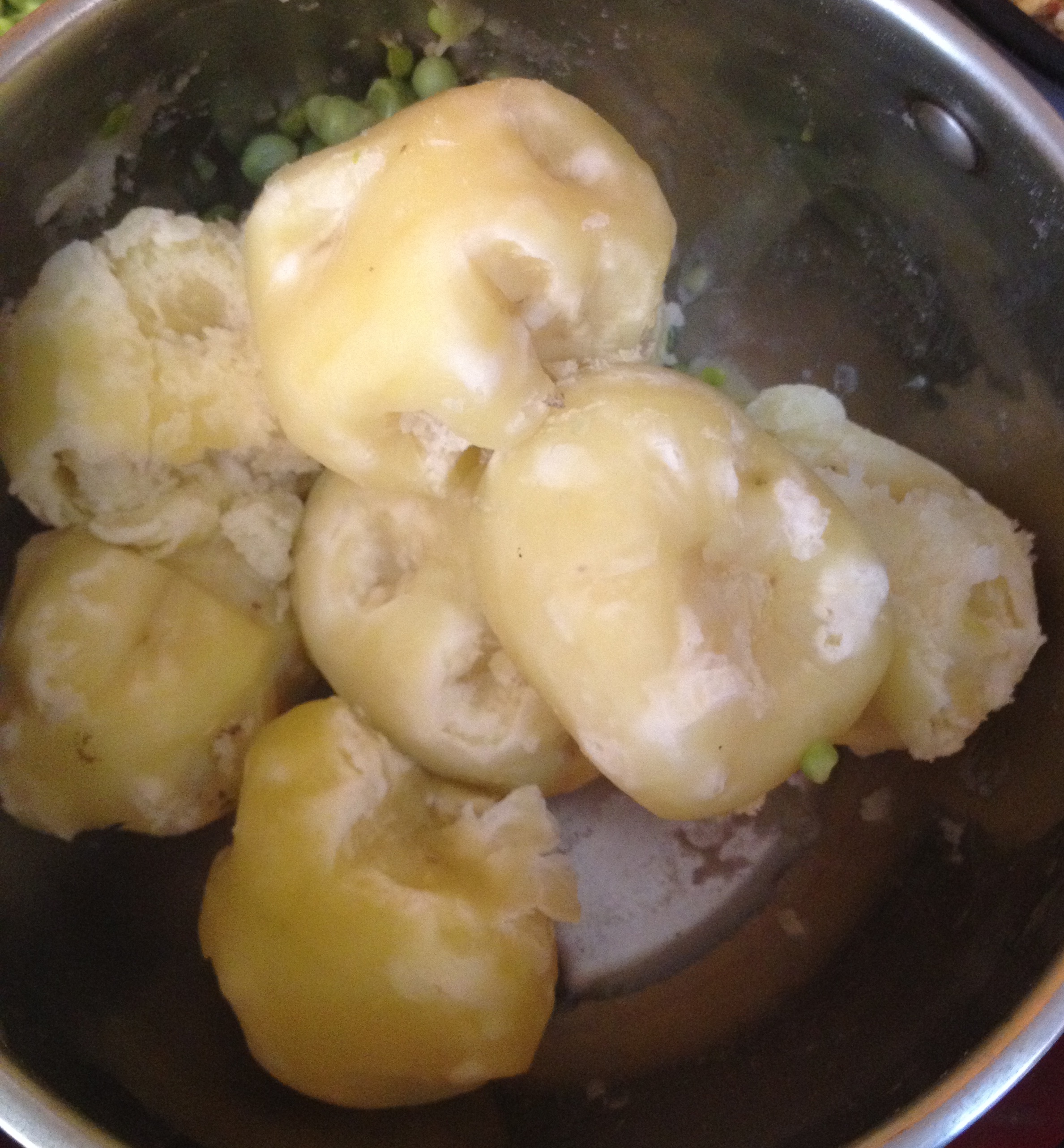
Boil the potatoes with a little bit of salt until they are soft. Set aside.
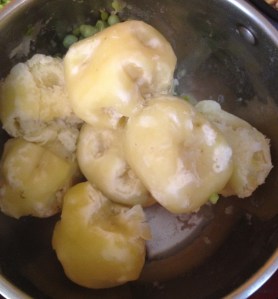
Preparing the Garnish:

1 cup of peas cooked (frozen peas work too)

½ cup choped parsley

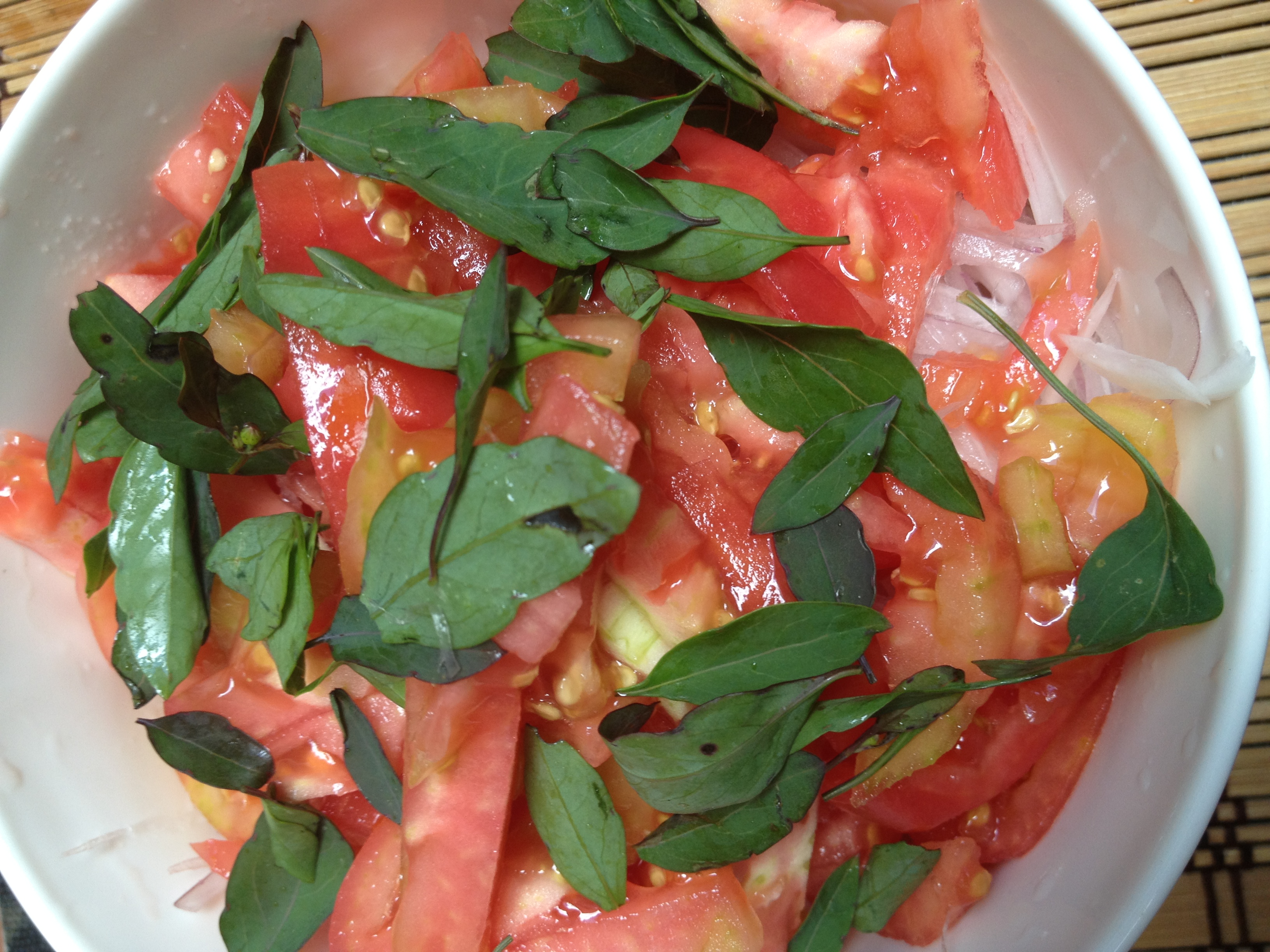
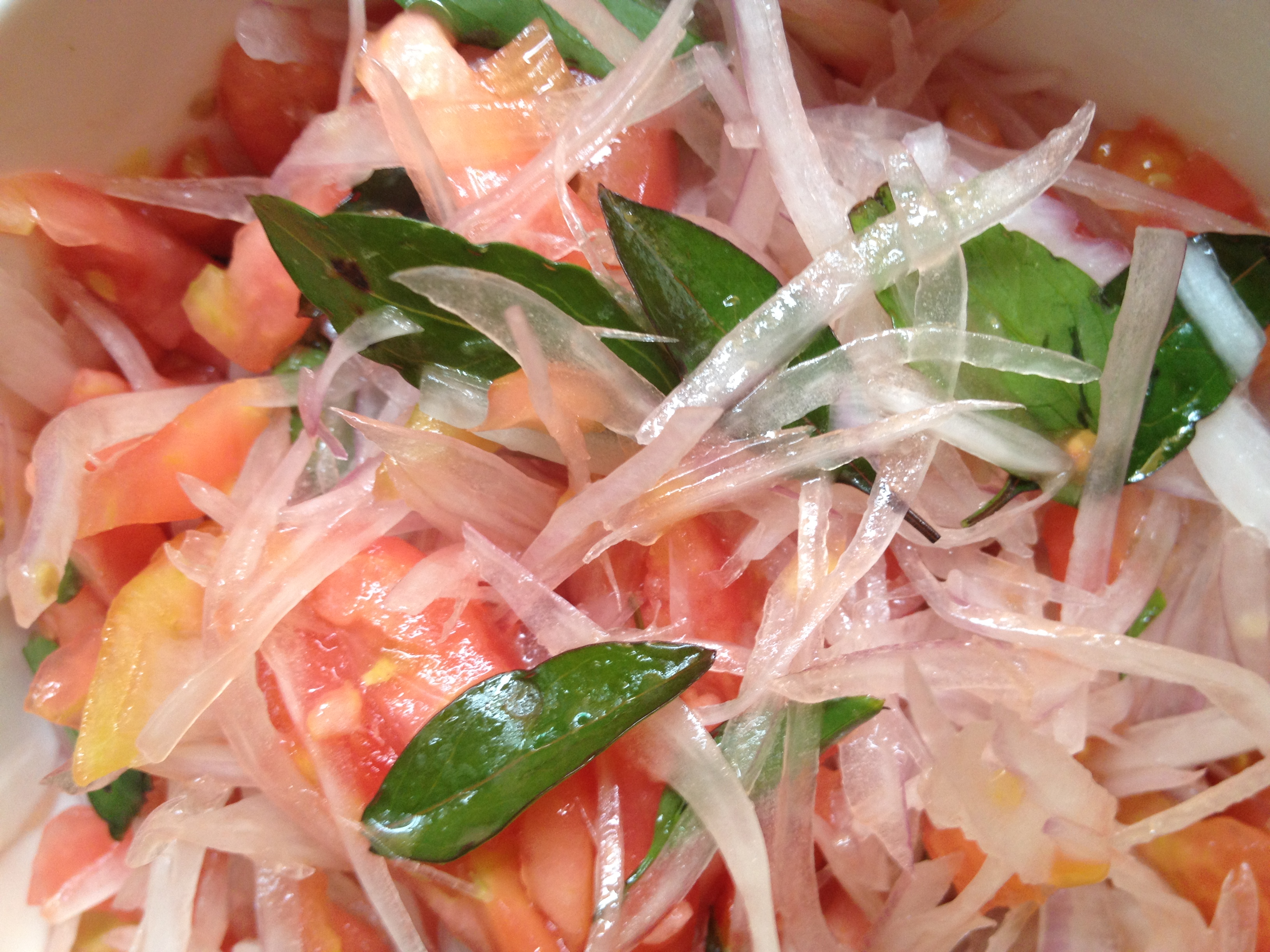
Salsa

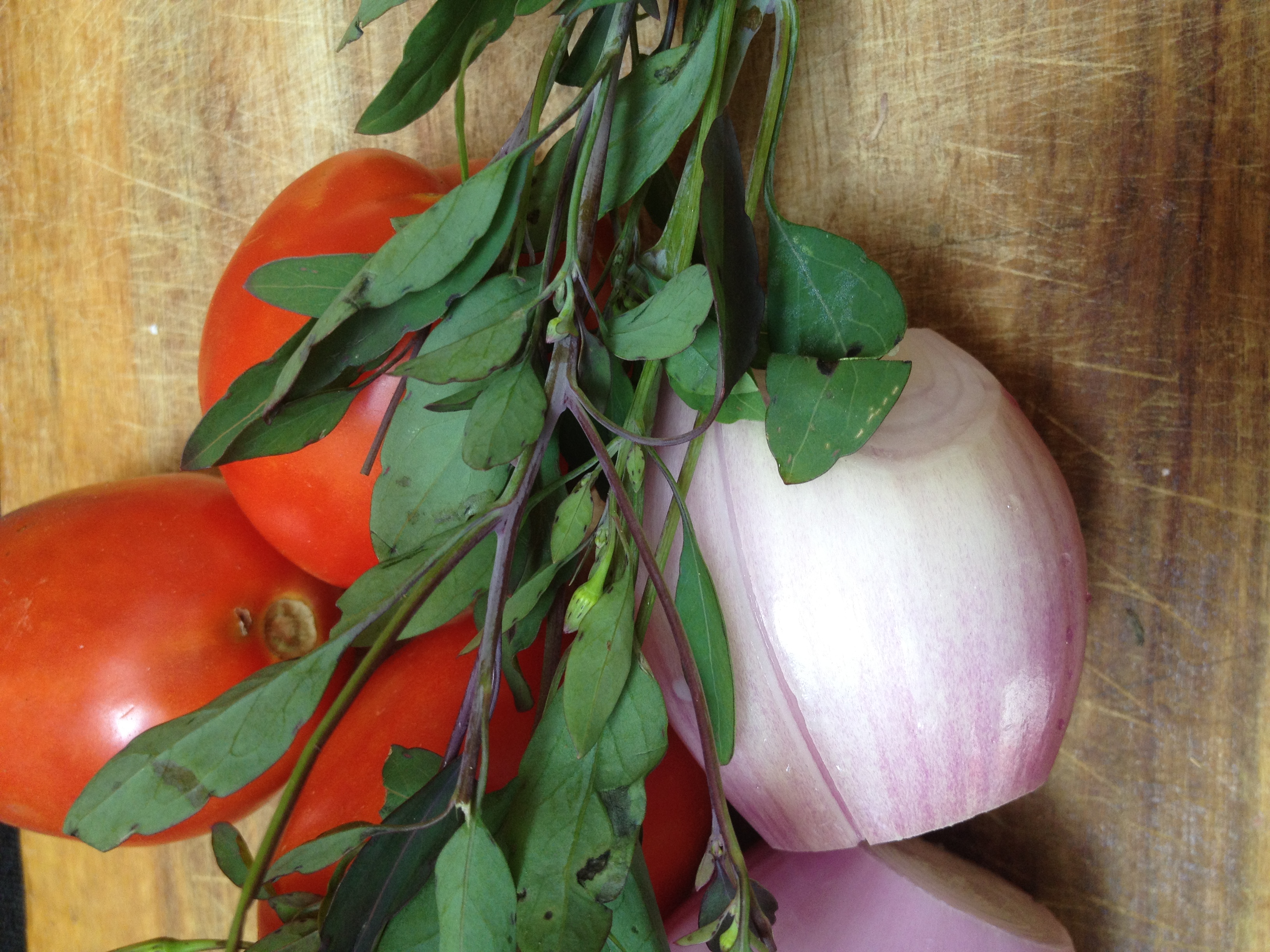
Ingredients for the salsa.

2 small onions

3 small tomatoes

3 stem of quilquiña

salt and oil

Get the ingredients ready, this is my favorite part since the garnish gives the dish the final touch.

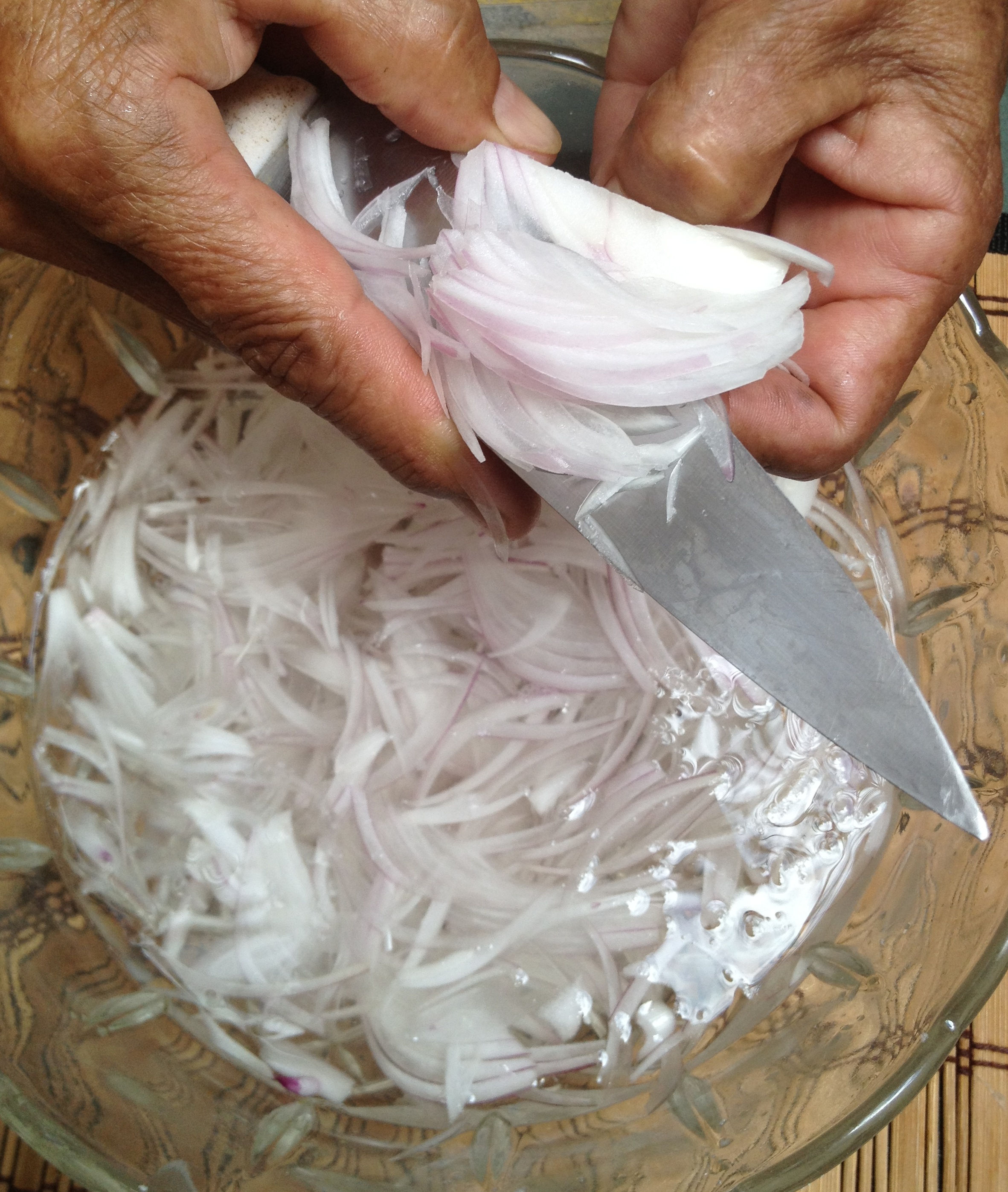
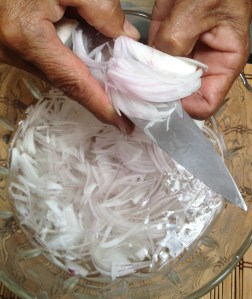
Cut the onion in “Juliana” style. Everyone says we should not wash the onion but since my mom always washes the onion, I do it that way too.

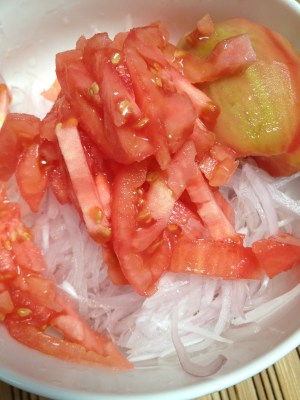
Rinse and peel the tomatoes. Cut them same way as the onion.
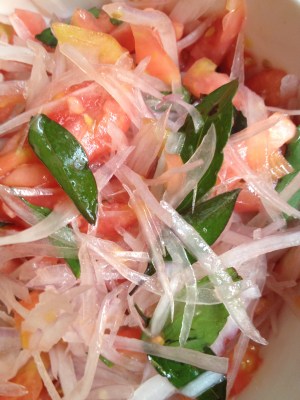
Take the leaves off of the quilquiña stems, and put them on top of the salsa.

Add the salt and oil to the salsa just before we put the plates together.

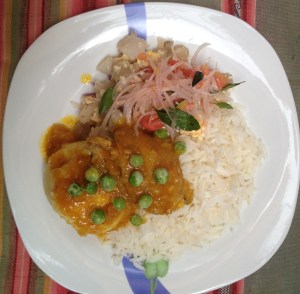
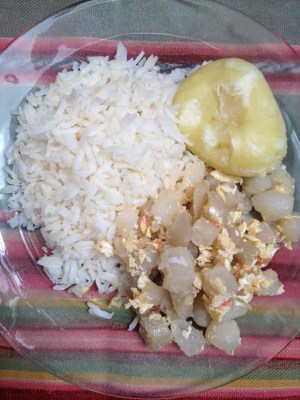
Put the plate together with the potato, rice and chuno going on first.
Sopa de Mani (Bolivian Peanut soup)


Sopa de mani

My friend Lindsay is a professional cook and a great writer. She asked me to cook  a Bolivian recipe for an article in the Portland Phoenix. The first thing that came to my mind was Sopa de Mani. In Bolivia when I was growing up, we would only have it on special occasions, and what a better occasion than to have a lunch with my friend? Unfortunately (or luckily), it was a hot summer day. But we ended up enjoying it anyway. Today, Maine is still cold with some snow in the ground, so I thought about posting this recipe to warm us with a soup that tastes great with a Marraqueta (Bolivian version of a Baguette). Enjoy!
As Rommy Holman, from Cochabamba, Bolivia, taught to Lindsey Sterling for the Portland Phoenix in Cumberland, Maine, June 2011.
Serves 8
Cooking Time: 2-3 hours.
1 Tbsp salt

4 beef ribs or bone-in cut of beef 1 small red onion

2 small carrots
1/2 green pepper, medium dice
1/4 red bell pepper, medium dice
10 green beans, sliced diagonally across for long, thin ovals
1/2 pound skinless raw peanuts (they’re not tan or brown, they’re cream-colored and may be called blanched)
4 Yukon potatoes
1/2 cup white rice
1 big clove garlic
1/2 tsp powdered cumin
1/4 tsp black pepper
handful fresh cilantro
handful fresh parsley
small bunch fresh celery leaves
1/4 cup peas
crusty bread
llajua (a fresh hot sauce condiment)
1 tomato
1 jalepeno
small handful cilantro
1 tsp dried oregano
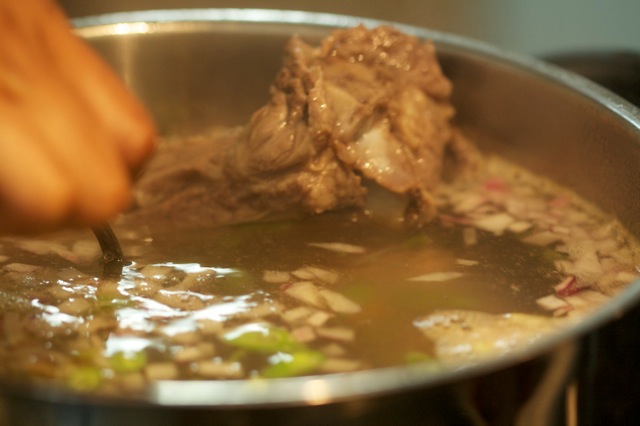
Fill soup pot 2/3 full of water, add 1 Tbsp salt and beef. Bring to boil and simmer for 1 hour or two (longer for the tougher cuts of meat). Keep a lid on to keep broth from evaporating too much. As the soup simmers, skim any fat and foam that rise to the top of the soup with a big flat spoon into a small bowl for easy discarding.
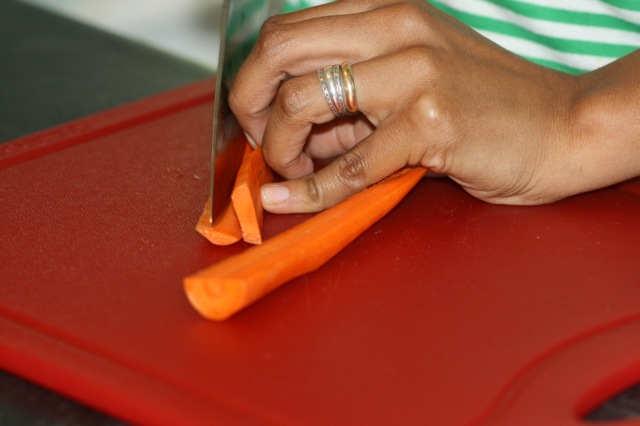
While the meat broth is brewing, cut your veggies. cut carrots lengthwise into 1/4″ thick planks and then crosswise into 1/4″ strips. Dice green and red pepper and onion. And cut the green beans on the diagonal to make thin long ovals. Put the veggies in the soup pot.

Make a raw peanut puree by blending the peanuts in a blender with about a cup of water until you have what looks like almost melting vanilla ice cream. After the meat has cooked for at least an hour, add the peanut puree so the soup turns white with a creamy top surface.
Continue cooking for an hour. I wouldn’t fudge that particular cooking time because Rommy said, “Raw peanuts need to be cooked an hour at least or it makes the tummy ache. That’s what my mom says.” An hour then! Stir occasionally so peanut particles don’t burn on the bottom. As this cooks, go ahead and do the following.
Mash garlic and 1/4 tsp pepper and 1/2 tsp cumin (and a little salt to aid the grinding) in a mortar and pestle. Don’t forget to smell this because it’s VERY satisfying. Add to soup.
Now it’s time to prep for the soup garnishes.

Make a bowl of fresh feathery herbs by gathering a tight bouquet of parsley and cilantro (she’d also use quilquina if she were home) and cutting across them toward your thumb with a paring knife. Fry potato strips.
 
Make fried potato strips by slicing potatoes across into round slices, and then slicing across the the slices to make thin strips. Covered with water (to keep from turning brown) until soup is almost done.

Strain potato strips. Pat dry with paper towels. Heat a half-inch of oil in a frying pan on medium high. Get a plate with paper towel over it ready for drying the fries. Test one strip in the oil. You want it to bubble vigorously. If it doesn’t, let the oil get hotter before adding potatoes. They’ll come out soggy if you add them to not-hot-enough oil. If the oil is smoking – it’s too hot. The fried potato strips are done when they’re golden brown; remove them from the oil with a slotted spoon or tongs and put them on paper towels to dry. Salt them.
Make homemade hotsauce, called llajua, by pulsing in the the blender ever so slowly fresh jalapenoes, tomatoes, and fresh cilantro (again, she’d use quilquina at home). Her mother would make it on a traditional tool, a rectangular mortar and pestle called a batan. Avoid putting the blender on full blast – it makes the hot sauce foamy, which is not authentic! Serve in dishes on table for individuals to spoon into soup as they like.
After the peanuts have simmered with the soup about an hour, add a cup of rice. After rice has cooked for about ten minutes, use cooking twine to tie a bouquet of celery leaves and parsley leaves and steep bouquet in the soup. Take meat out of the pot. Pull meat off bone, discard bone, and put meat back in soup.
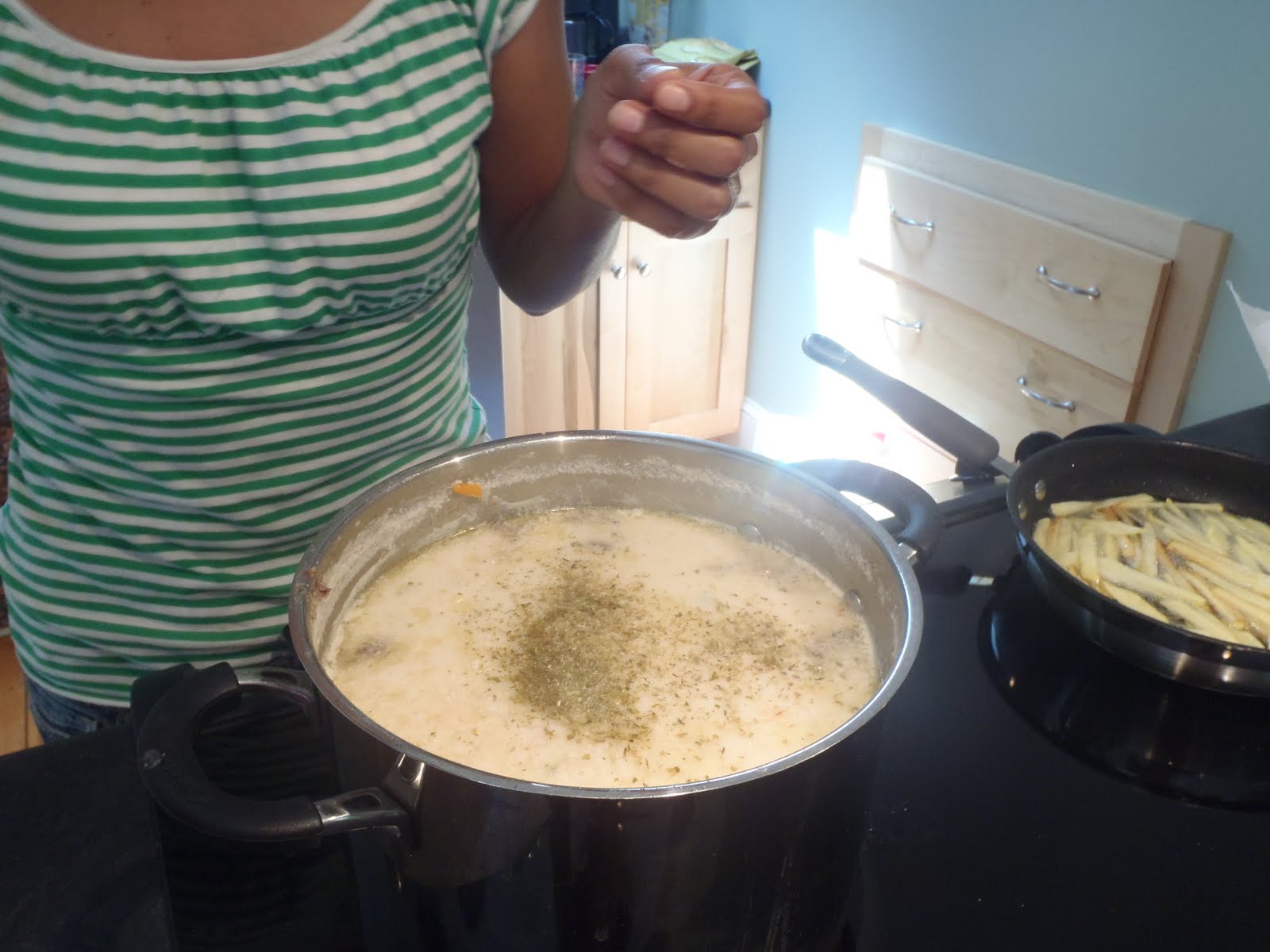
When the rice in the soup is cooked, add peas and sprinkle dried oregano over top. Now taste the soup. Add salt so that it tastes the best it can be. Serve soup in shallow bowls, sprinkle fried potatoes in the center of each bowl and fresh herbs all over top. Serve with chunks of baguette and the llajua on the table.
Yo can freeze this soup and taste delicious every time!
Photos by Lindsay Sterling and Yulia Converse.

Sonzo

This Delicious pastry is made with 3 simple ingredients and is really easy to make. I modified the final presentation a little, it would usually be finished on a grill, but I cooked it an oven. Usually in Bolivia, we enjoy Sonzo in the afternoon  with a cup of black coffee. I love having it Sonzo the cold days in Maine as a side dish.

Sonzo

Serves 6

Ingredients:

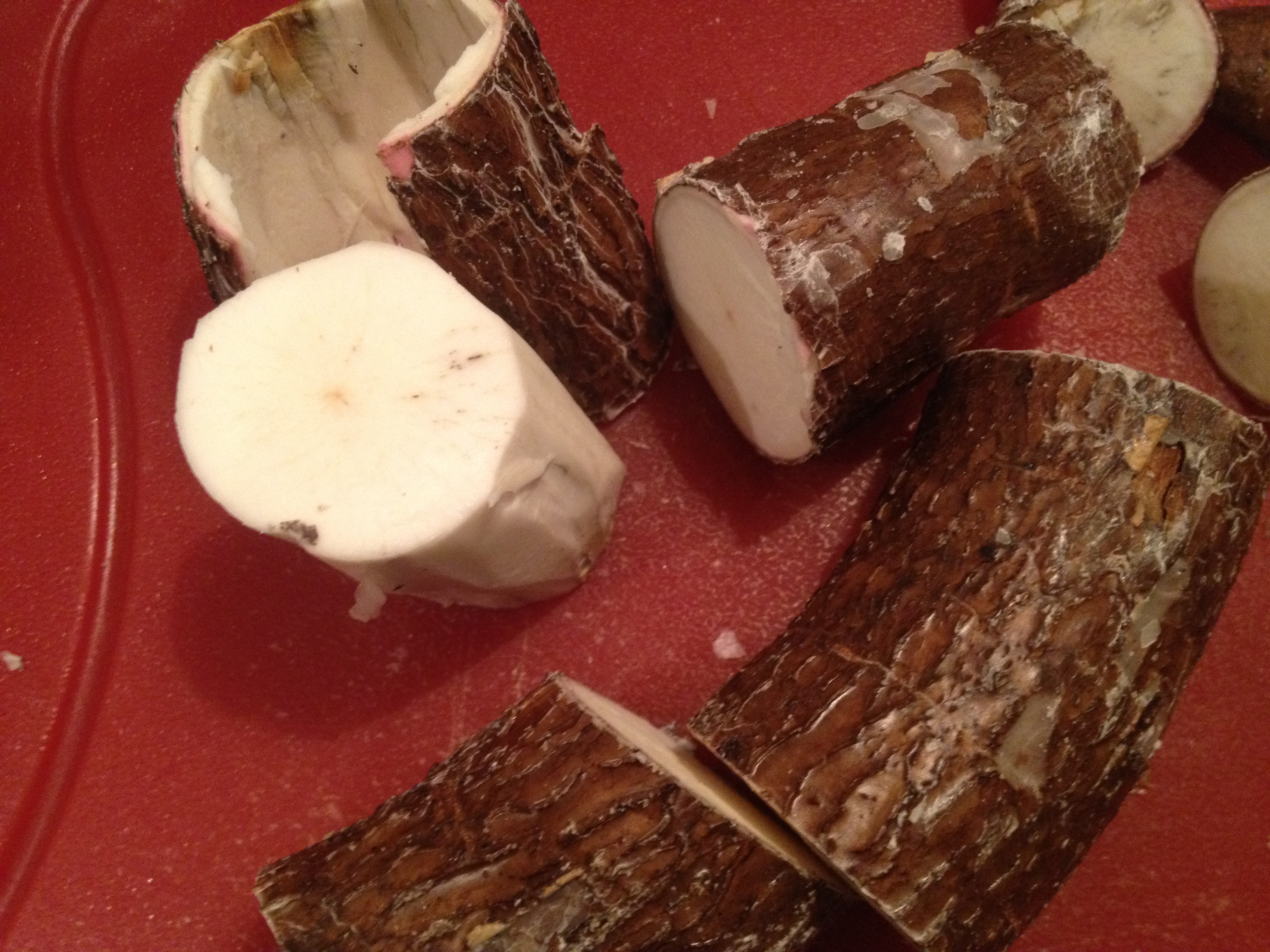
3 Large Yuca roots ( Yuca is a long root that has hard skin and cooks like a potato)

1 1/2 Cup of grated Monterrey Jack cheese, (in Bolivia we use Menonita, San Javier or Queso Fresco)

2  tbsp of unsalted butter and little bit more to butter the baking dish.

Cooking Instruction

Butter a 9″ round pie dish or a 8×8″ square dish

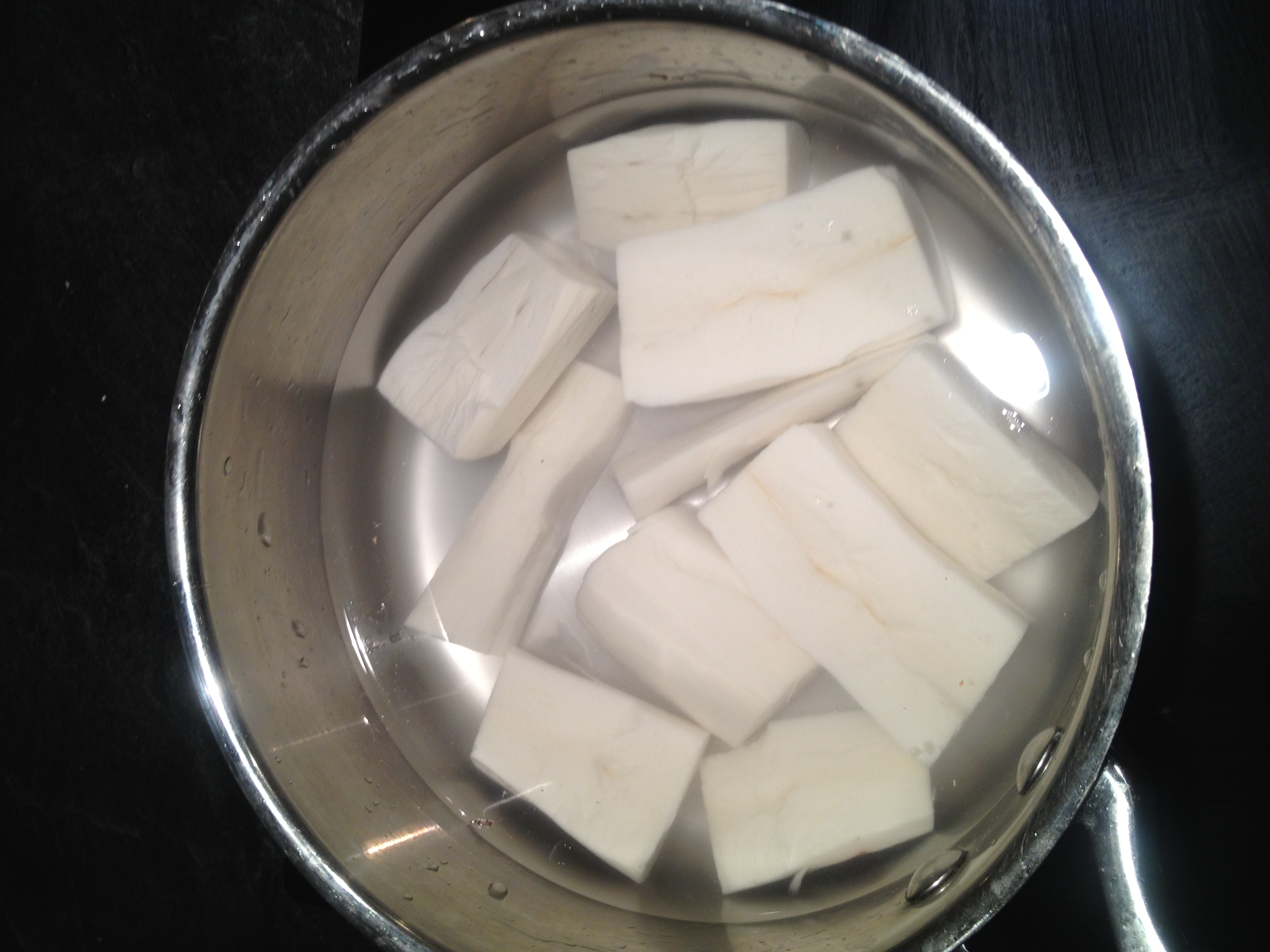
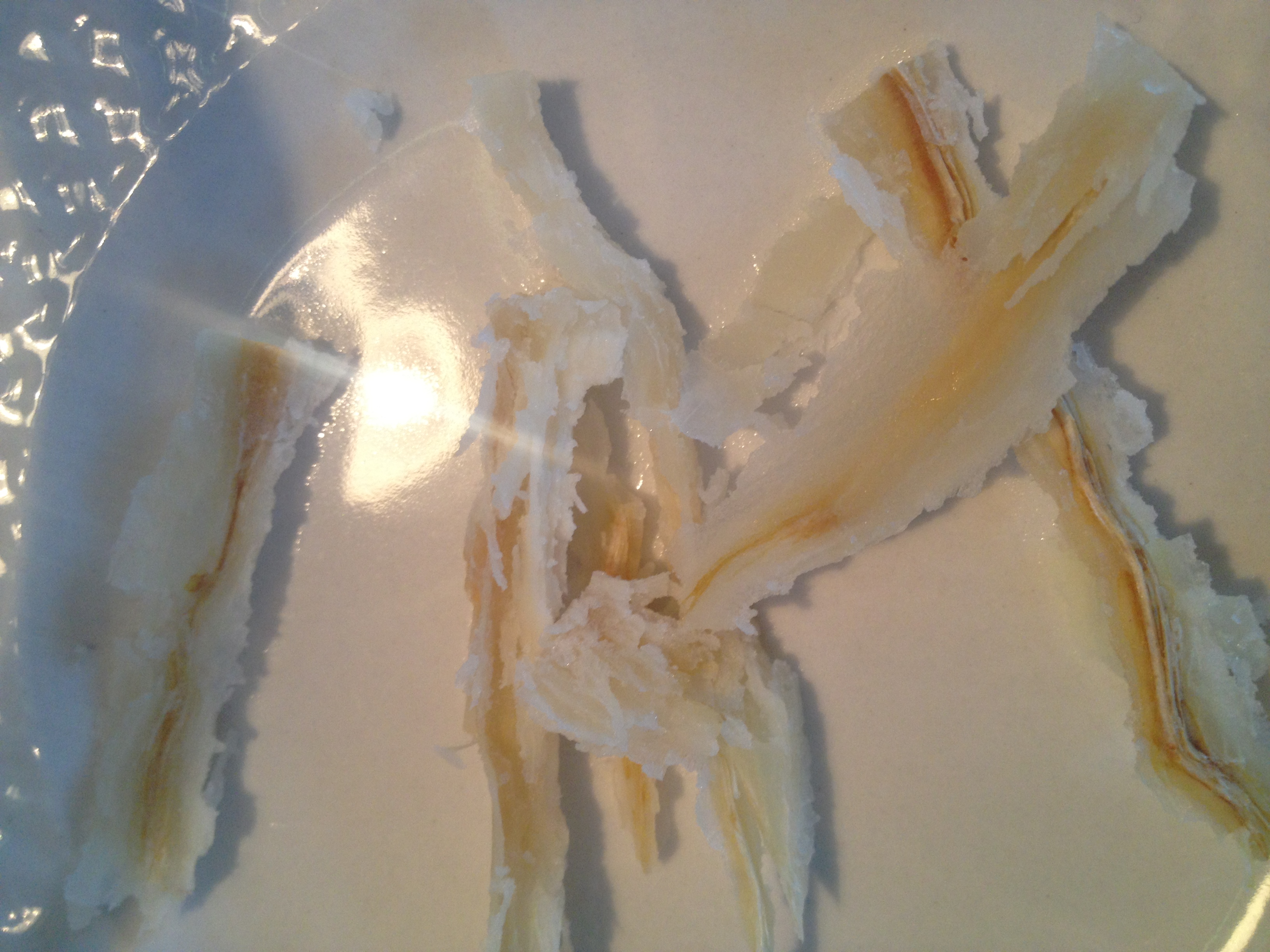
Peel the yuca roots. Cut the roots in 3 pieces and cut each piece in half. Put them in a pot and boil for about 20 min.

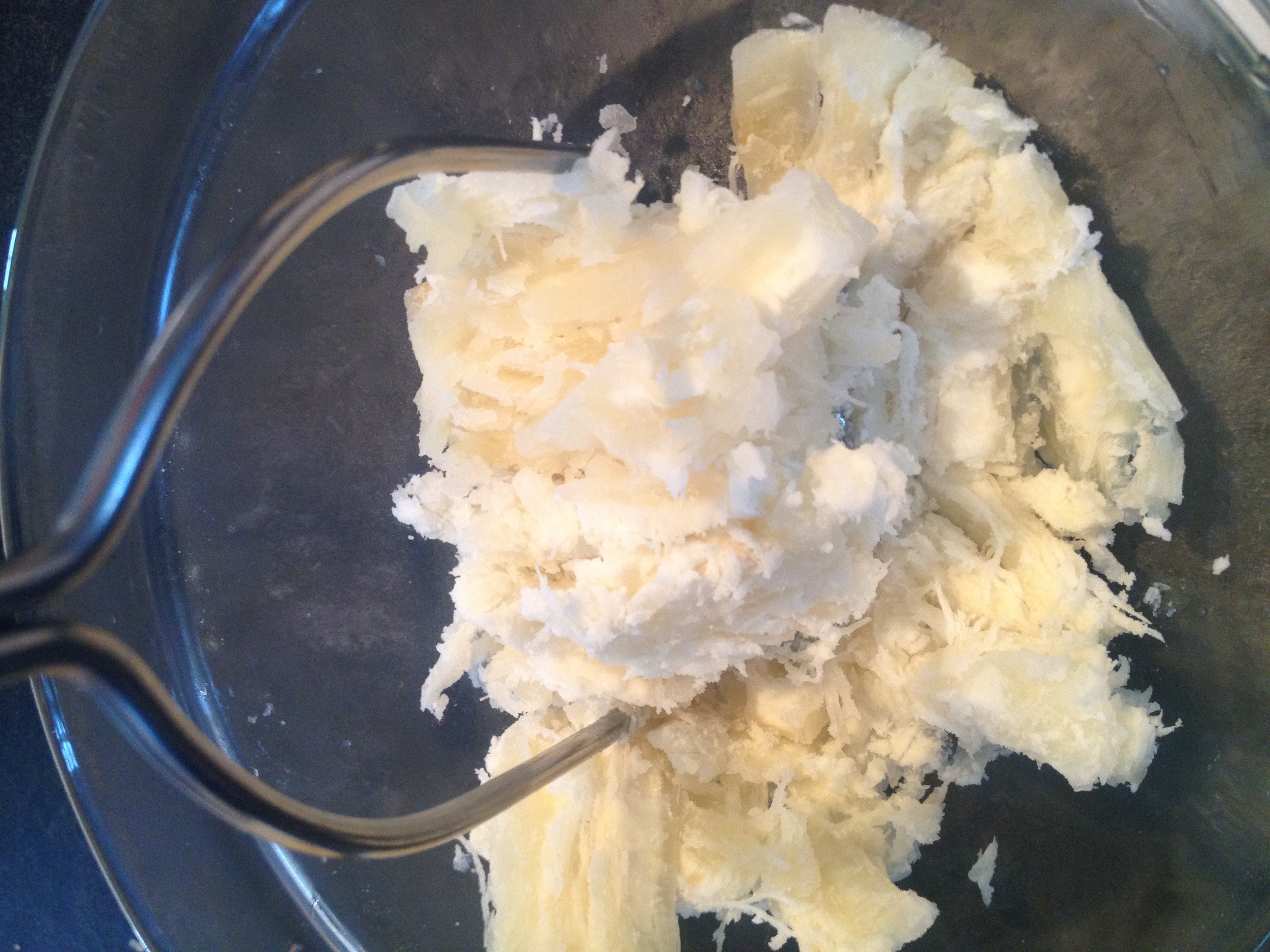
Once the yuca roots are cooked, take the middle parts out of the yuca and mash them as if they were potatos.

Add the butter and keep mixing. Add half of the cheese to form a a nice soft dough. Heat the oven to 350 F

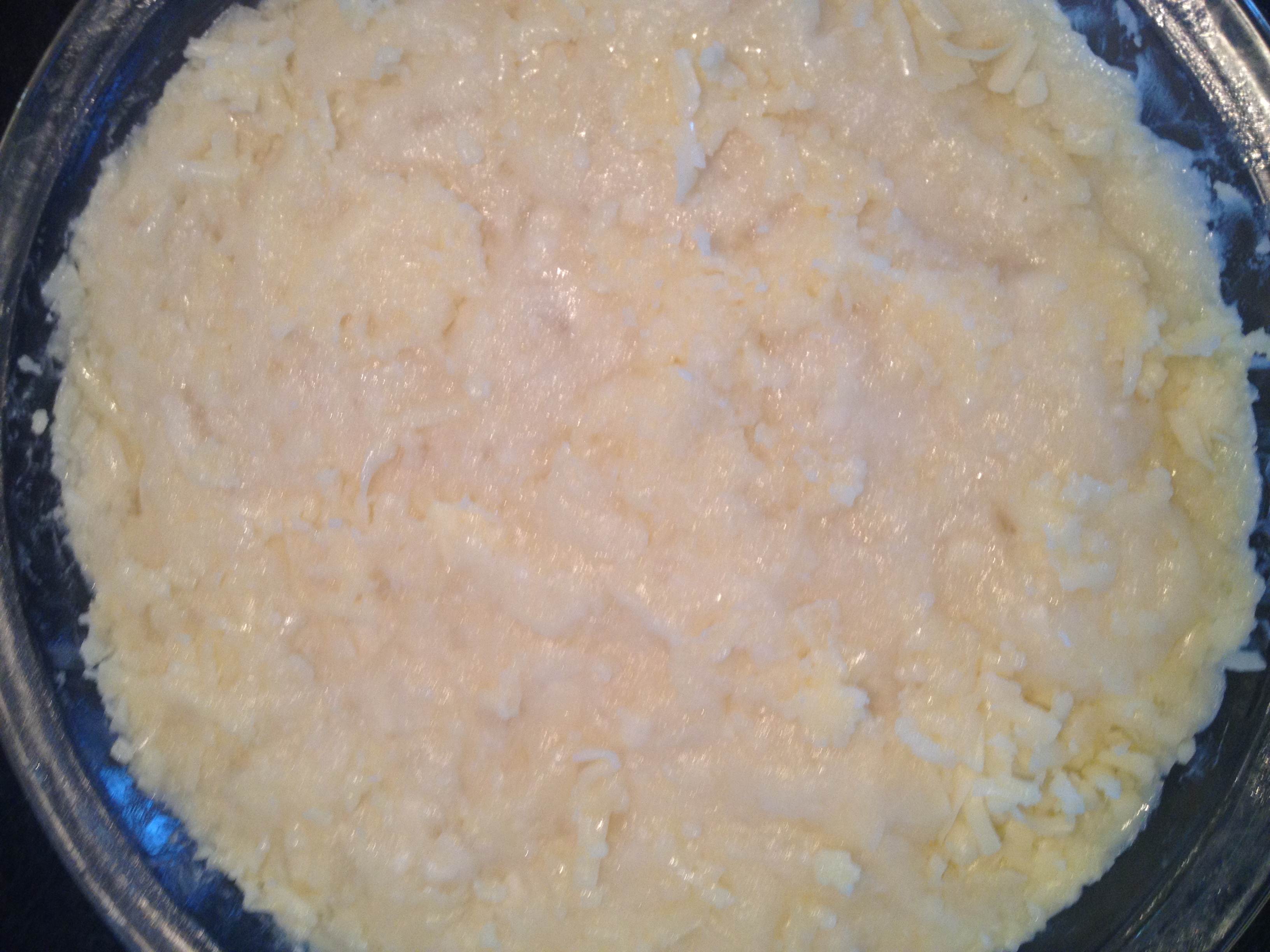
Put half of the dough in the baking dish and sprinkle half of the cheese on. Pour the other half of the cheese on and sprinkle the rest on the dish. Bake for 30 min and broil for 5 min or until the cheese is golden at the top. Serve warm.

Chan’ka de Pollo

Chan’ka de Pollo


IMG_5434

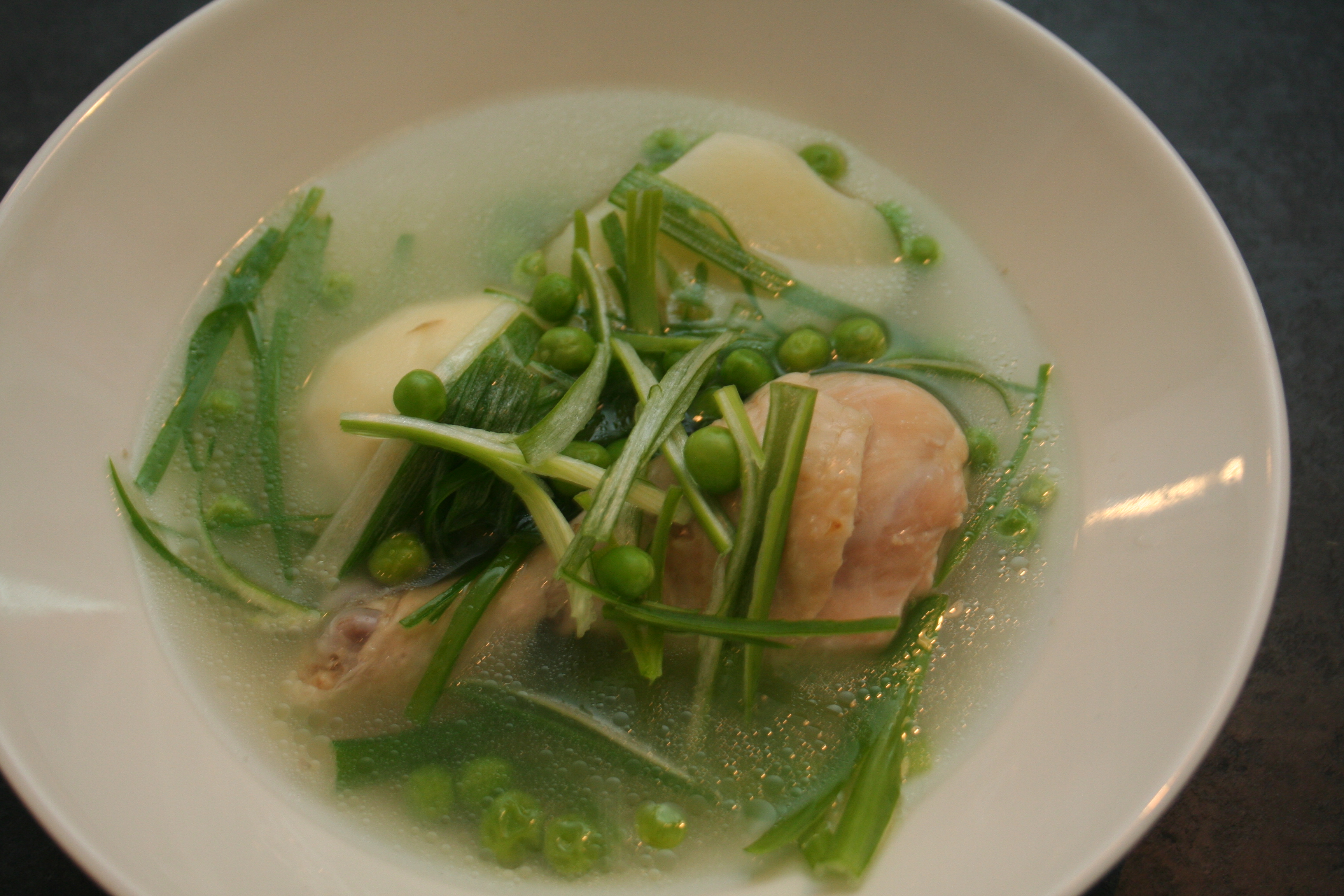
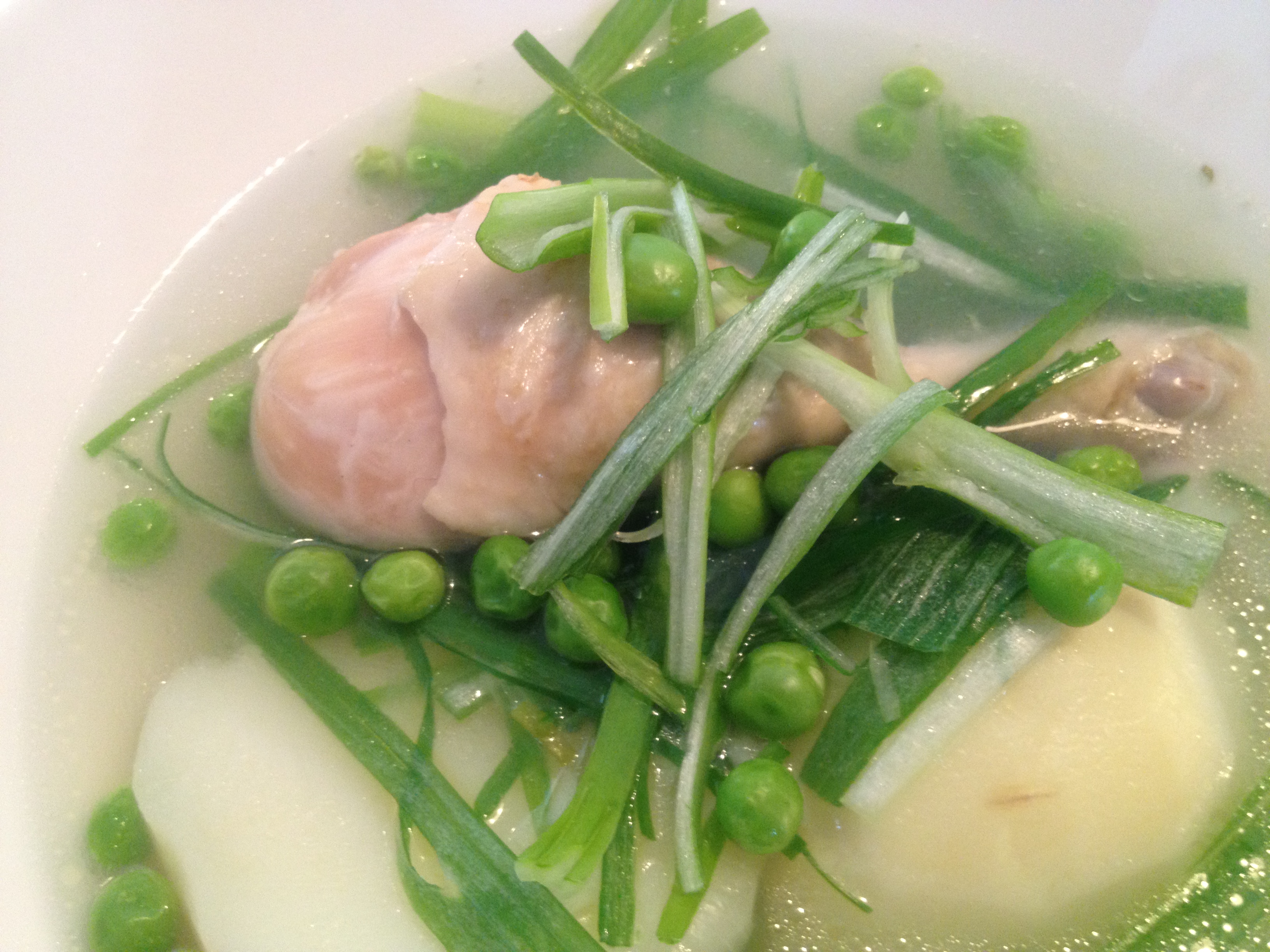
This is one of my favorites soups, my mom will make it when I was  feeling  a little bit sick, usually has Chuño and Fava beans instead of peas, but it works great with green peas. Enjoy ! Disfrutenlo!


Serves 4

4 Free range chicken legs
4 Large potato peeled
½ Cup fresh or frozen peas
1 Large Green onion  we will use the white and green part.
4 Cups of water or Chicken broth.
salt
pepper

Cooking Instructions:

Get ready the ingredientes:

Put the 4 cups of water to boiled add the chicken salt some pepper and the white part of the green onion chopped. Let it cooked for about 15 min and add the peeled potatos and cook until they are soft.

Meanwhile Chopped the green part of the green onion:

Add the chopped green onions and the frozen peas to the soup and turn off the stove. Let it cool for about 10 min serve warm with one chicken leg one potato and some green onions and peas on the top. This delicious soups goes really well with a spicy Lllajua.

IMG_5430

Falso Conejo “Fake Rabbit”

Falso Conejo (Is it really a Fake Rabbit?)

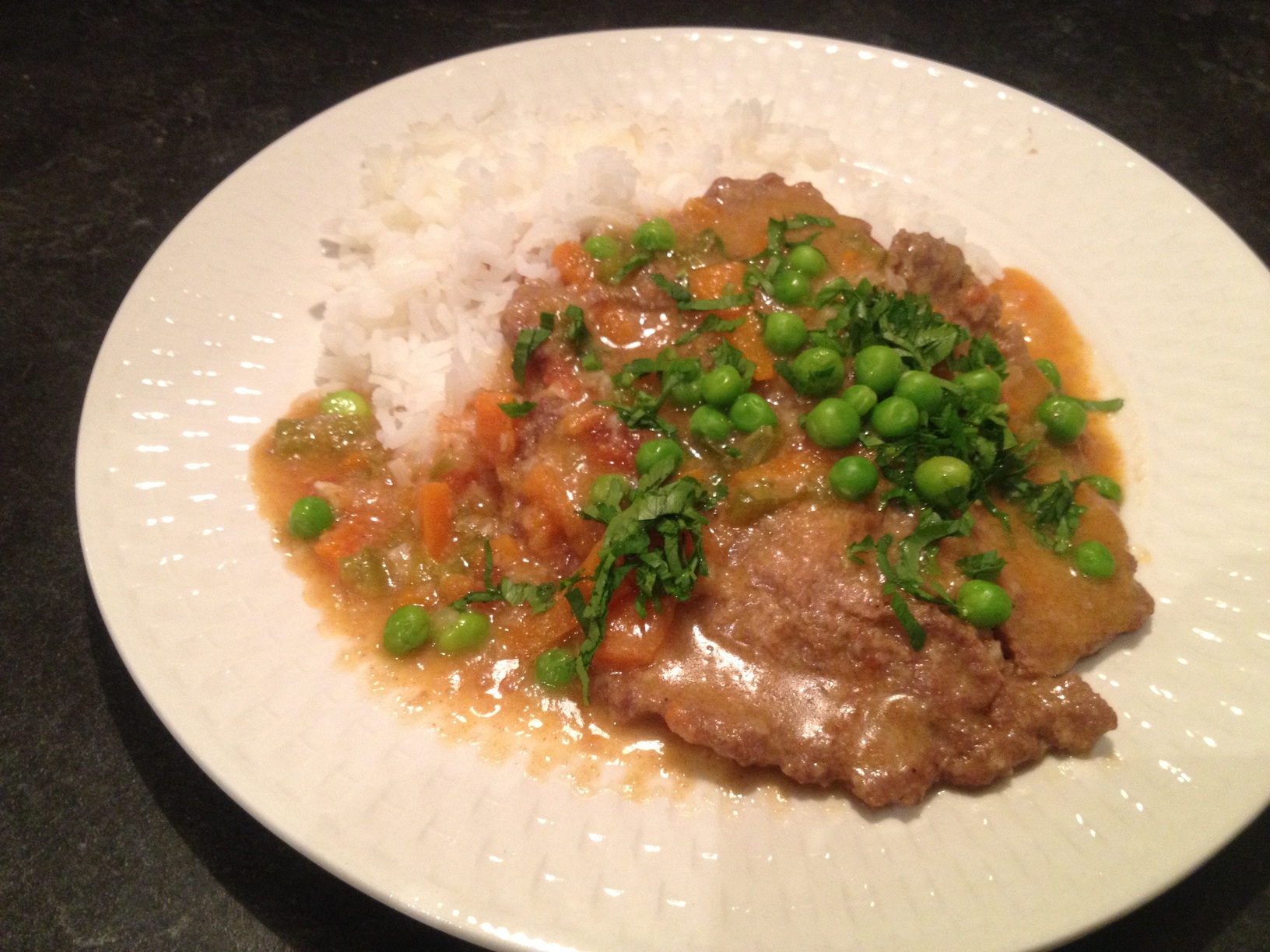
Why is this dish called Falso Conejo or Fake Rabbit? I do not have the answer but I can tell you that is very delicious! The dish really doesn’t look or taste like rabbit meat. You can use any type of ground meat but my favorite is ground meat from a local farmer that is low in fat or even bison meat which is very lean and healthy.

See the ingredients, recipe and photos here! Continue reading